I remember that afternoon clearly—the kitchen was bright with sunlight sneaking through the window, and the air smelled faintly of fresh earth and rain. I was fiddling with some leftover veggies, a bit too tired to make anything complicated, so I tossed together what I had on hand. Honestly, I wasn’t expecting much from this fresh spring minestrone soup with herbs. It felt like one of those “just throw it all in” moments after a hectic morning that left me craving something simple yet satisfying.
But as the soup simmered, the aroma of garlic, basil, and thyme mingling with tender vegetables filled the room—and suddenly, it all felt like a cozy reset. My skepticism melted away with the first spoonful, revealing bright, layered flavors that tasted like spring itself—a humble bowl that somehow felt like a fresh start. It’s the kind of recipe that stuck around in my meal rotation, quietly winning over my friends during casual get-togethers and even impressing a few picky eaters.
There’s something about this homemade, herb-infused bowl that feels both grounding and light, perfect for those days when you want food that comforts without weighing you down. And honestly, it’s become my go-to when I need a quick, wholesome meal that doesn’t require a million steps or fancy ingredients. This fresh spring minestrone soup with herbs invites you to savor the simple joys of seasonal cooking, one spoonful at a time.
Why You’ll Love This Fresh Spring Minestrone Soup Recipe
This fresh spring minestrone soup with herbs isn’t just another vegetable soup—it’s a thoughtfully crafted, flavor-packed bowl that’s been tested and loved in my kitchen more times than I can count. Here’s why it’s worthy of a spot on your table:
- Quick & Easy: Ready in under 45 minutes, this recipe fits perfectly into busy weeknights or those spontaneous lunch plans.
- Simple Ingredients: No need for exotic spices or hard-to-find produce. Most ingredients are pantry staples or fresh market finds, making it super accessible.
- Perfect for Spring: The fresh herbs and bright veggies celebrate the season, creating a taste that feels vibrant and renewing.
- Crowd-Pleaser: Whether you’re feeding family or friends, this soup gets nods of approval across all ages—yes, even from my notoriously picky nephew!
- Unbelievably Delicious: The careful balance of herbs like basil, oregano, and thyme with the hearty beans and tender pasta creates a texture and flavor combo that’s hard to beat.
What sets this fresh spring minestrone soup apart is the herb infusion technique—adding fresh herbs at just the right moment to preserve their brightness without overpowering the broth. Plus, I swap out the usual canned tomatoes for fresh cherry tomatoes in season, which adds a subtle sweetness that makes a difference. It’s not just a vegetable soup; it’s a little celebration of spring in every bowl.
Honestly, after making this a handful of times (sometimes twice a week!), I’ve realized it’s the kind of recipe that turns simple ingredients into something memorable—comfort food that never feels heavy or boring.
What Ingredients You Will Need
This fresh spring minestrone soup recipe uses wholesome, fresh ingredients that bring bold flavor and satisfying texture without much fuss. Most are pantry staples or easy to find at your local market, with plenty of room for swaps if needed.
- Olive oil – For sautéing (I prefer Colavita extra virgin olive oil for its rich flavor)
- Yellow onion, finely chopped – The aromatic base
- Garlic cloves, minced – Adds depth and warmth
- Carrots, diced – For sweetness and color
- Celery stalks, diced – Classic minestrone texture
- Fresh cherry tomatoes, halved – Use fresh in spring, canned if off-season
- Zucchini, diced – Adds summer freshness
- Green beans, trimmed and cut into bite-sized pieces – For crunch and color
- Small pasta shapes (like ditalini or elbow macaroni) – About ¾ cup (90g), to add heartiness
- Cannellini beans, drained and rinsed – Protein and creaminess (canned is fine)
- Vegetable broth – 6 cups (1.4 liters), homemade or store-bought low sodium
- Fresh herbs:
- Basil, roughly chopped – ¼ cup
- Oregano, fresh leaves – 1 tablespoon
- Thyme, fresh sprigs – 3-4
- Salt and freshly ground black pepper – To taste
- Grated Parmesan cheese – Optional, for serving (choose authentic Parmigiano-Reggiano if possible)
If you want to make this recipe gluten-free, use gluten-free pasta or swap in small grains like quinoa. For a vegan version, omit the cheese or use a plant-based alternative. When fresh herbs aren’t available, dried can work but add them earlier in the cooking to release flavor.
Equipment Needed
- Large soup pot or Dutch oven: Essential for even heating and enough space to simmer the soup comfortably.
- Cutting board and sharp chef’s knife: For chopping all the fresh vegetables and herbs.
- Wooden spoon or heat-resistant spatula: To stir the soup without scratching your pot.
- Measuring cups and spoons: For precise ingredient amounts, especially pasta and broth.
- Colander or strainer: To rinse beans and drain pasta if you prefer cooking separately.
If you don’t have a Dutch oven, a heavy-bottomed saucepan will do. I’ve found that a wider pot really helps reduce cooking time by allowing more evaporation and browning during sautéing. Personally, I like using a sharp chef’s knife that feels balanced—it makes chopping herbs like basil and thyme much smoother, which is crucial to avoid bruising them too much.
Preparation Method
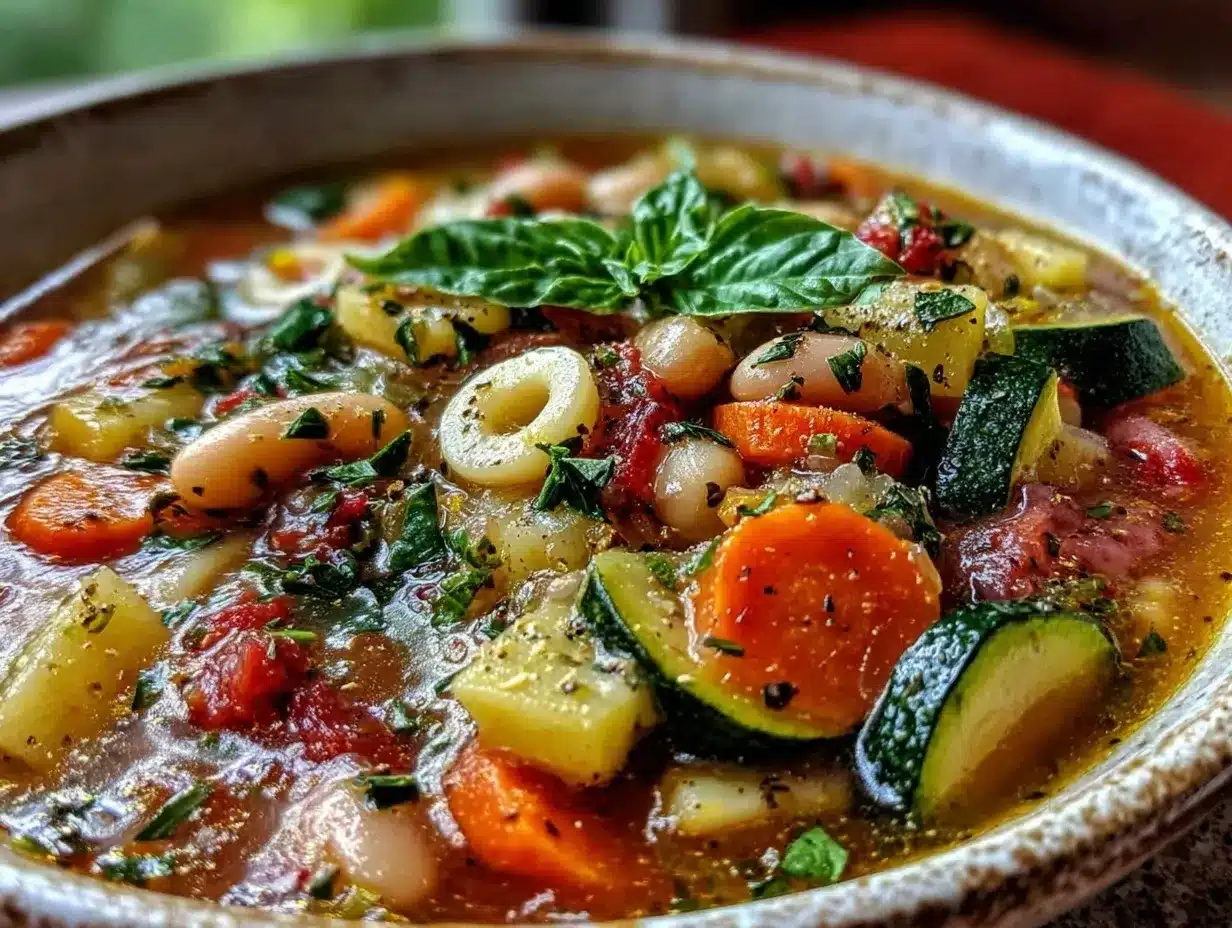
- Prepare the vegetables: Dice the onion, carrots, celery, zucchini, and trim the green beans. Halve the cherry tomatoes and mince the garlic. This prep should take about 10-15 minutes.
- Sauté aromatics: Heat 2 tablespoons (30 ml) of olive oil in your large pot over medium heat. Add the chopped onion, carrots, and celery, stirring occasionally until softened and translucent, about 5-7 minutes. Add the garlic and cook an additional 1 minute until fragrant. Be careful not to burn the garlic—it should smell sweet, not bitter.
- Add fresh tomatoes and herbs: Stir in the cherry tomatoes, fresh thyme sprigs, and oregano leaves. Cook for 3-4 minutes, letting the tomatoes soften and release juices.
- Pour in broth and bring to simmer: Add the 6 cups (1.4 liters) of vegetable broth. Increase heat to high and bring to a gentle boil. Once boiling, reduce heat to low to maintain a simmer.
- Add pasta and beans: Stir in the pasta and cannellini beans. Simmer uncovered for 10 minutes, stirring occasionally to prevent pasta from sticking. The pasta should be tender but still hold its shape.
- Add zucchini and green beans: Toss in diced zucchini and green beans. Continue simmering for another 5-7 minutes until vegetables are just tender but still crisp.
- Finish with fresh basil and season: Remove the pot from heat, discard thyme sprigs, and stir in chopped fresh basil. Season generously with salt and pepper to taste. Let the soup rest for a few minutes to allow flavors to meld.
- Serve: Ladle into bowls and sprinkle with freshly grated Parmesan cheese if desired.
Keep an eye on the pasta texture throughout; overcooking can make the soup mushy. If you want a thicker broth, simmer uncovered a bit longer before adding zucchini and green beans. This recipe yields about 6 servings and can be doubled easily if you’re cooking for a crowd.
Cooking Tips & Techniques
To get the best from this fresh spring minestrone soup with herbs, here are some tips I picked up after a few early attempts:
- Don’t rush the sauté: Taking time to gently soften onions, carrots, and celery builds a flavor base that makes all the difference. Sauté on medium heat to avoid browning too fast.
- Fresh herbs timing matters: Add hardy herbs like thyme and oregano early to infuse the broth, but reserve delicate basil for the end to keep its bright flavor intact.
- Use quality broth: A good vegetable broth—homemade or store-bought low sodium—lifts the whole soup. I’ve tried some cheaper brands, and the soup just doesn’t sing as well.
- Cook pasta separately if you expect leftovers: Pasta tends to soak up broth and get mushy over time. Cooking it separately and adding just before serving keeps it perfectly tender.
- Season gradually: Salt in stages—after sautéing vegetables, after adding broth, and before serving—to layer flavors without over-salting.
- Don’t skip the Parmesan: A sprinkle adds umami and creaminess that completes the flavor profile, though it’s optional for vegans or dairy-free.
Early on, I learned the hard way that adding all herbs at once can muddle flavors. Also, chopping herbs with a dull knife bruises them, turning bright green leaves into dull mush. A sharp knife and gentle handling make a big difference.
Variations & Adaptations
This fresh spring minestrone soup is incredibly flexible. Here are a few ways I’ve tweaked it to suit different needs and tastes:
- Protein boost: Add cooked shredded chicken or Italian sausage slices for a heartier meal.
- Seasonal swaps: In the fall, swap zucchini and green beans for butternut squash and kale for a cozy twist—similar to my approach in the creamy roasted butternut squash soup recipe.
- Grain alternative: Use barley or farro instead of pasta for a nutty texture and extra fiber.
- Vegan version: Skip Parmesan and use nutritional yeast or a vegan cheese alternative. Just watch the salt levels carefully.
- Spicy kick: Add a pinch of red pepper flakes during sautéing or a swirl of pesto for an herbal heat.
Personally, I once added leftover spicy avocado chicken to turn this soup into a full-on meal for a quick lunch—unexpected but surprisingly delicious!
Serving & Storage Suggestions
This fresh spring minestrone soup is best enjoyed warm, ladled into rustic bowls with a crusty slice of bread or a simple side salad. It shines when the herbs are fresh and vibrant, so serve soon after cooking if possible.
Leftovers keep well in the fridge for up to 3 days. To maintain the best texture, store pasta separately if you can and add it when reheating. Reheat gently on the stove over medium-low heat with a splash of broth or water to loosen the soup.
You can freeze this soup for up to 2 months, but I recommend freezing without pasta and adding freshly cooked pasta when serving to avoid sogginess.
The flavors often deepen after a day, making it a great make-ahead meal for busy days. Pair with a glass of crisp white wine or a light herbal tea to complement the fresh herbs.
Nutritional Information & Benefits
This fresh spring minestrone soup is a nutrient-packed meal with a balance of veggies, fiber, and plant protein from beans. On average, one serving contains approximately 220 calories, 7 grams of protein, 35 grams of carbohydrates, and 5 grams of fat.
Key benefits include antioxidants from fresh herbs like basil and oregano, which support digestion and immunity. The cannellini beans add iron and protein, making this soup satisfying and sustaining.
Gluten-free options are easy with alternative pasta, and it’s naturally low in saturated fat. Just watch the salt if using canned broth or beans.
For those mindful of dairy, serving without Parmesan keeps the dish vegan and still flavorful.
Conclusion
This fresh spring minestrone soup with herbs has quietly become one of my favorite ways to celebrate seasonal produce and simple cooking. It’s a bowl that’s flexible, wholesome, and packed with bright, layered flavors that never feel heavy or complicated. Whether you’re cooking for yourself or a crowd, it’s a reliable recipe that invites you to slow down and savor each spoonful.
Feel free to swap ingredients, tweak the herbs, or add your favorite protein to make it your own. For me, it’s that comforting yet refreshing meal that keeps me coming back, especially when I want something cozy but light.
I’d love to hear how you make your fresh spring minestrone soup—and what twists you add along the way. Leave a comment below and share your kitchen stories!
FAQs About Fresh Spring Minestrone Soup with Herbs
Can I make this soup ahead of time?
Yes! It tastes great the next day, but store pasta separately if possible and add it fresh when reheating to avoid mushiness.
What can I substitute for cannellini beans?
Great alternatives include navy beans, chickpeas, or kidney beans depending on your preference and pantry staples.
Is this recipe suitable for a vegan diet?
Absolutely! Just omit the Parmesan or use a plant-based cheese alternative.
Can I freeze this minestrone soup?
Yes, but for best texture, freeze without pasta and add freshly cooked pasta when reheating.
What pasta shape works best in minestrone?
Small shapes like ditalini, elbow macaroni, or small shells work well, as they mix easily with the veggies and broth.
Pin This Recipe!
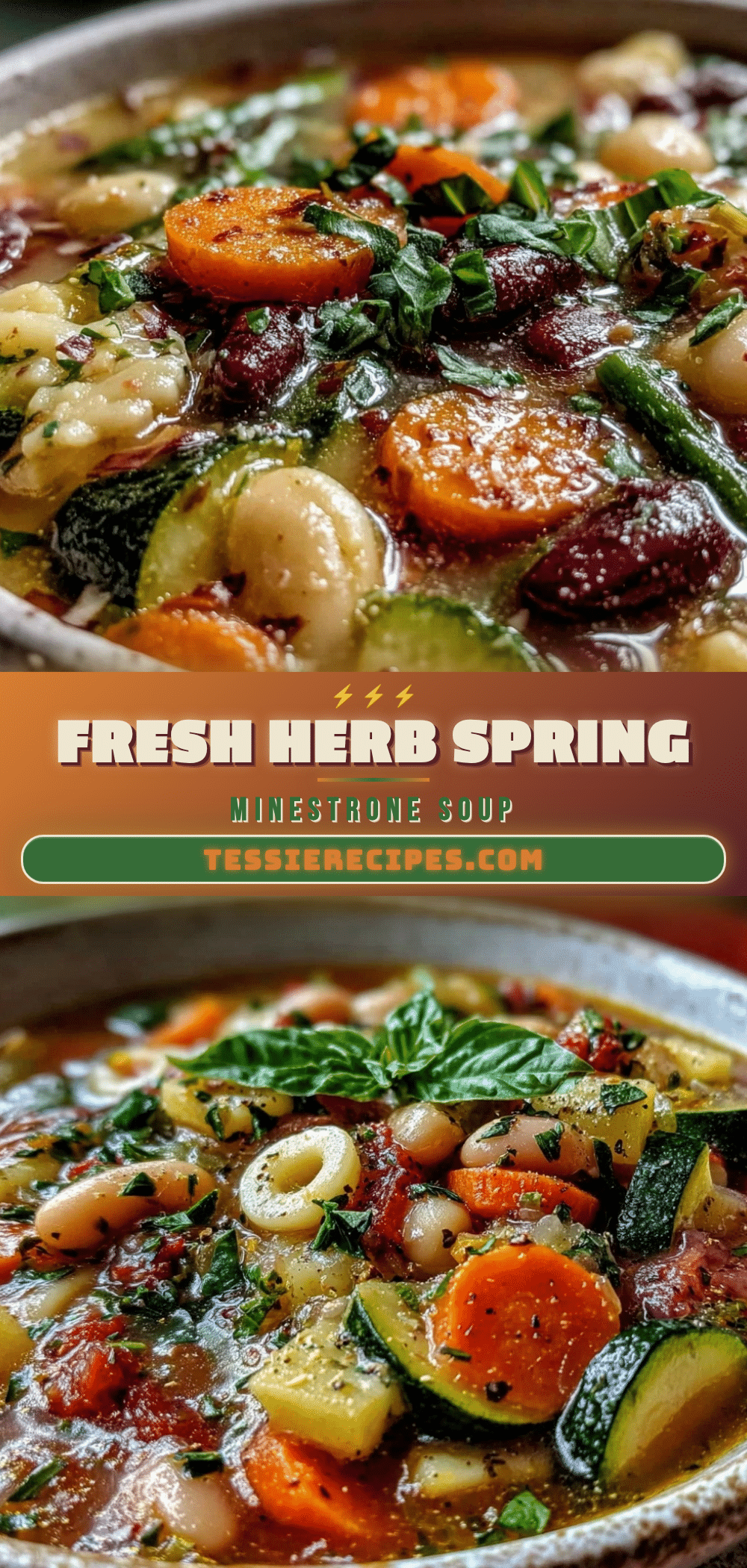
Fresh Spring Minestrone Soup Recipe Easy Homemade Herb-Infused Bowl

A quick and easy fresh spring minestrone soup infused with herbs, featuring bright vegetables and tender pasta for a wholesome, comforting meal perfect for celebrating seasonal produce.
- Prep Time: 15 minutes
- Cook Time: 30 minutes
- Total Time: 45 minutes
- Yield: 6 servings 1x
- Category: Main Course
- Cuisine: Italian
Ingredients
- 2 tablespoons olive oil (preferably extra virgin)
- 1 yellow onion, finely chopped
- 3 garlic cloves, minced
- 2 medium carrots, diced
- 2 celery stalks, diced
- 1 cup fresh cherry tomatoes, halved
- 1 medium zucchini, diced
- 1 cup green beans, trimmed and cut into bite-sized pieces
- 3/4 cup small pasta shapes (ditalini or elbow macaroni)
- 1 can (15 oz) cannellini beans, drained and rinsed
- 6 cups vegetable broth (homemade or store-bought low sodium)
- 1/4 cup fresh basil, roughly chopped
- 1 tablespoon fresh oregano leaves
- 3–4 fresh thyme sprigs
- Salt and freshly ground black pepper, to taste
- Grated Parmesan cheese (optional, for serving)
Instructions
- Prepare the vegetables: Dice the onion, carrots, celery, zucchini, and trim the green beans. Halve the cherry tomatoes and mince the garlic. This prep should take about 10-15 minutes.
- Sauté aromatics: Heat 2 tablespoons of olive oil in a large pot over medium heat. Add the chopped onion, carrots, and celery, stirring occasionally until softened and translucent, about 5-7 minutes. Add the garlic and cook an additional 1 minute until fragrant, being careful not to burn it.
- Add fresh tomatoes and herbs: Stir in the cherry tomatoes, fresh thyme sprigs, and oregano leaves. Cook for 3-4 minutes, letting the tomatoes soften and release juices.
- Pour in broth and bring to simmer: Add the 6 cups of vegetable broth. Increase heat to high and bring to a gentle boil. Once boiling, reduce heat to low to maintain a simmer.
- Add pasta and beans: Stir in the pasta and cannellini beans. Simmer uncovered for 10 minutes, stirring occasionally to prevent pasta from sticking. The pasta should be tender but still hold its shape.
- Add zucchini and green beans: Toss in diced zucchini and green beans. Continue simmering for another 5-7 minutes until vegetables are just tender but still crisp.
- Finish with fresh basil and season: Remove the pot from heat, discard thyme sprigs, and stir in chopped fresh basil. Season generously with salt and pepper to taste. Let the soup rest for a few minutes to allow flavors to meld.
- Serve: Ladle into bowls and sprinkle with freshly grated Parmesan cheese if desired.
Notes
To keep pasta from getting mushy in leftovers, cook pasta separately and add when reheating. Add fresh basil at the end to preserve its bright flavor. Use gluten-free pasta or small grains like quinoa for gluten-free option. Omit Parmesan or use vegan cheese for vegan diet. Season gradually to avoid over-salting. Freeze soup without pasta for best texture.
Nutrition
- Serving Size: 1 bowl (approximatel
- Calories: 220
- Sugar: 6
- Sodium: 400
- Fat: 5
- Saturated Fat: 0.7
- Carbohydrates: 35
- Fiber: 7
- Protein: 7
Keywords: minestrone soup, spring soup, herb-infused soup, vegetable soup, easy soup recipe, healthy soup, vegetarian soup, gluten-free option