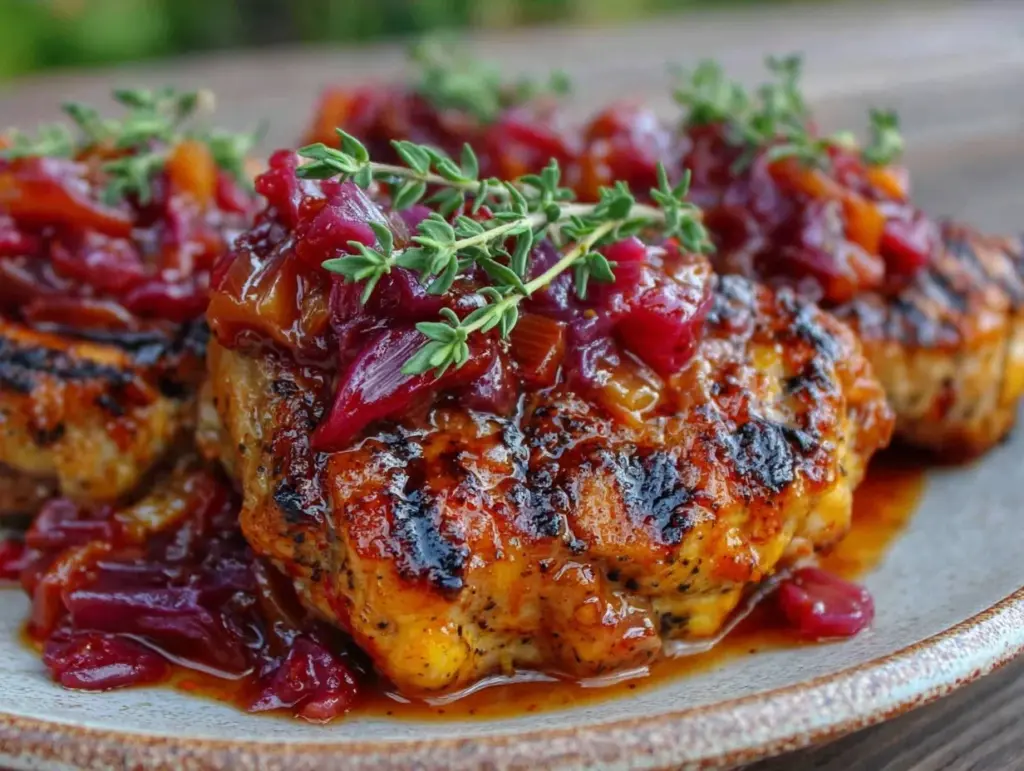
“Just give it a try,” my neighbor said, sliding a jar of homemade rhubarb sauce across the counter with a mischievous grin. Honestly, I was skeptical — rhubarb always struck me as a dessert ingredient, tart and tough to tame. But that afternoon, with a couple of pork chops staring at me from the fridge, I figured, why not? One spoonful of that tangy rhubarb sauce later, and I was hooked. The sauce wasn’t just a condiment; it was like a little zingy surprise that wrapped around the savory chops, making every bite sing.
That accidental taste-test turned into a weekend obsession. I tried it with chicken too, and the way the sauce cut through the richness of the meat made me realize this was no ordinary sauce. It’s the kind of recipe that sneaks into your meal rotation before you even notice — simple, fresh, and wildly flavorful. Something about the sharp rhubarb mellowed with just the right touch of sweetness, and the subtle warmth from spices, made it a perfect partner for pork chops and chicken alike.
What’s stuck with me is how easy it is to make this tangy rhubarb sauce at home, even if you’ve never cooked with rhubarb before. It’s that little unexpected twist in a weeknight dinner that quietly impresses without any fuss. As the sauce simmers away, filling the kitchen with a bright, fruity aroma, you realize this isn’t just about flavor — it’s about the small moments in cooking that turn a simple meal into something quietly special.
So, if you’ve ever found yourself wondering how to bring something fresh and tangy to your pork chops or chicken, this sauce might just be the answer you didn’t know you were craving. Give it a shot — you might find yourself making it more often than you thought possible.
Why You’ll Love This Tangy Rhubarb Sauce for Pork Chops and Chicken
After testing this recipe across several meals, I can say it’s one of those rare sauces that feels both fancy and effortless. It’s been through the “taste and tweak” phase more times than I can count — and it still wins every time. Whether you’re a busy cook or someone who likes a bit of zing in your savory dishes, this rhubarb sauce fits right in.
- Quick & Easy: Ready in under 20 minutes, perfect for busy weeknights or when you want something special without overthinking it.
- Simple Ingredients: No need for exotic spices or hard-to-find items; everything comes from your basic pantry and maybe fresh rhubarb from the market or garden.
- Perfect for Weeknight Dinners or Casual Entertaining: Whether it’s just dinner for two or a small get-together, this sauce pairs beautifully with both pork chops and chicken.
- Crowd-Pleaser: Family and friends keep asking for the recipe, which, honestly, always feels like a win.
- Unbelievably Delicious: The balance between tart rhubarb and mellow sweetness makes this sauce a standout — it’s tangy but never overpowering.
This recipe isn’t your usual rhubarb jam or pie filling turned sauce. The addition of a touch of mustard and subtle warming spices sets it apart, making it ideal for savory dishes. I’ve even swapped in a bit of honey instead of sugar when I wanted a slightly richer finish, and it worked like a charm. It’s the kind of sauce that makes you close your eyes after the first bite — that kind of satisfying comfort food with a fresh twist.
If you’re curious about pairing this sauce with other dishes, it reminds me a bit of the tangy punch in the maple bourbon pork chops with caramelized apples, but with a brighter, fruitier flair. You’ll find it’s a lovely companion to many different cuts and cooking styles.
What Ingredients You Will Need
This tangy rhubarb sauce uses simple, wholesome ingredients to deliver bold flavor and satisfying texture without fuss. Most ingredients are pantry staples, with fresh rhubarb being the star. If rhubarb isn’t readily available, frozen works just fine, too.
- Fresh rhubarb stalks, chopped into 1/2-inch pieces (about 3 cups or 375g) – the foundation of the sauce, providing tartness and texture
- Granulated sugar (3/4 cup or 150g) – balances the natural tartness of rhubarb nicely; feel free to reduce slightly if you prefer less sweet
- Water (1/2 cup or 120ml) – to help soften the rhubarb as it cooks
- Apple cider vinegar (2 tablespoons) – adds a bright acidity that lifts the sauce, making it perfect for pork and chicken
- Dijon mustard (1 teaspoon) – gives a subtle depth and slight kick without overpowering
- Ground ginger (1/4 teaspoon) – warms up the sauce with a gentle spice note
- Cinnamon (1/4 teaspoon) – adds a hint of warmth and complexity
- Salt (1/4 teaspoon) – enhances all the flavors
- Black pepper (freshly ground, 1/8 teaspoon) – just a touch to balance the sweetness
- Unsalted butter (1 tablespoon) – stirred in at the end for richness and silky texture
For a little variation, I’ve swapped out the granulated sugar for honey or maple syrup when I wanted a more complex sweetness. Also, if you want a thicker sauce, a teaspoon of cornstarch dissolved in cold water helps it come together beautifully. When I’m pressed for time, frozen rhubarb from a trusted brand like Oregon Fruit Products works wonderfully without compromising flavor.
Equipment Needed
- Medium saucepan – ideal for simmering the rhubarb sauce evenly
- Wooden spoon or silicone spatula – for stirring without scratching your cookware
- Measuring cups and spoons – precise measurements help keep the flavor balanced
- Knife and cutting board – for chopping fresh rhubarb stalks
- Fine mesh sieve or blender (optional) – if you prefer a smoother sauce, you can strain or blend it
I usually keep a small whisk handy for mixing in the mustard and vinegar smoothly. If you’re tempted to skip the butter, I recommend sticking with it — it really brings the sauce together. For budget-friendly cookware, a simple non-stick saucepan works great, but I find stainless steel pots give the best heat control for simmering.
Preparation Method
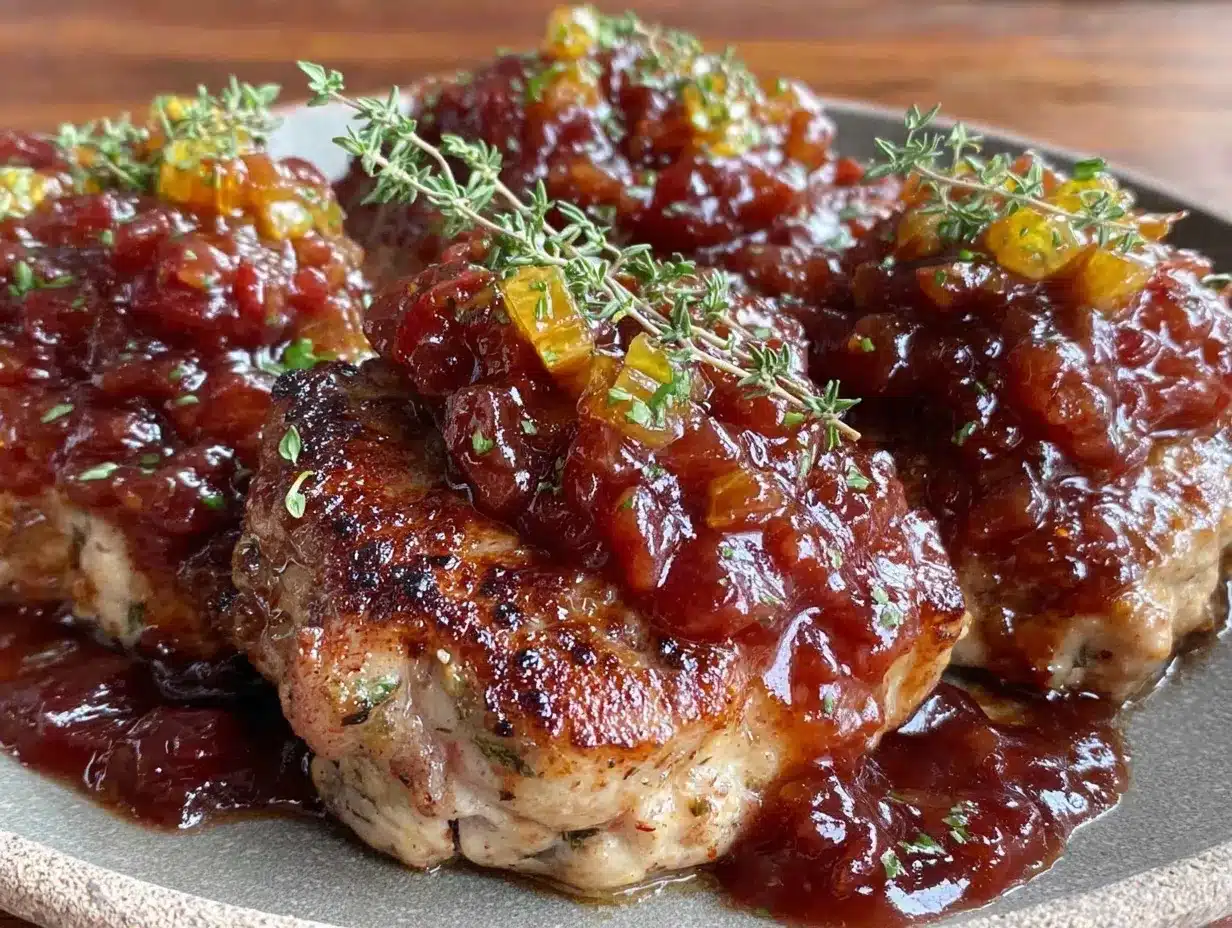
- Prep the rhubarb: Wash and chop about 3 cups (375g) of fresh rhubarb stalks into 1/2-inch pieces. If using frozen, no need to thaw first.
- Combine ingredients: In a medium saucepan, add rhubarb, 3/4 cup (150g) granulated sugar, and 1/2 cup (120ml) water. Stir gently to mix.
- Bring to a simmer: Place the saucepan over medium heat. Stir occasionally until the mixture comes to a gentle simmer, about 5 minutes.
- Add flavorings: Stir in 2 tablespoons apple cider vinegar, 1 teaspoon Dijon mustard, 1/4 teaspoon ground ginger, 1/4 teaspoon cinnamon, 1/4 teaspoon salt, and 1/8 teaspoon freshly ground black pepper. These spices balance the tartness and add warmth.
- Simmer gently: Reduce heat to low and let the sauce simmer uncovered, stirring every few minutes, until the rhubarb breaks down and the sauce thickens slightly — about 10-15 minutes. It should coat the back of a spoon but still have a little texture.
- Optional thickening: If you prefer a smoother or thicker sauce, mix 1 teaspoon cornstarch with 1 tablespoon cold water, then stir into the sauce and cook for 1-2 more minutes until thickened.
- Finish with butter: Remove the sauce from heat and stir in 1 tablespoon of unsalted butter until melted and glossy. This step gives a silky finish and rounds out the flavors.
- Adjust seasoning: Taste and add a pinch more salt or sugar if needed. The sauce should be tangy, slightly sweet, with a gentle spice warmth.
- Serve warm: Spoon the tangy rhubarb sauce over freshly cooked pork chops or chicken breasts.
Pro tip: Keep an eye on the simmer — too high a heat can make the sauce dry out or burn quickly. Stirring often helps maintain a smooth texture. If you want to get fancy, blending half the sauce smooth and leaving the other half chunky creates a nice balance.
Cooking Tips & Techniques
One thing I learned the hard way is that rhubarb’s natural tartness can sometimes overpower if you rush the cooking. Low and slow simmering really lets the flavors mellow and blend beautifully. Also, don’t skip the vinegar — it brightens the sauce and keeps it from tasting one-dimensional.
When stirring in the mustard, whisk it into the vinegar first before adding to the pot. This prevents clumps and helps distribute the flavor evenly. I once tossed it in straight, and let’s just say there were a few unwelcome mustard pockets.
For consistency, use fresh rhubarb when in season. Frozen rhubarb works in a pinch but may release extra water, so adjust cooking time accordingly. If your sauce ends up too thin, a quick cornstarch slurry thickens it up nicely without changing the taste.
Pairing this sauce with thicker cuts like bone-in pork chops or grilled chicken thighs works well because the tang cuts through the richness. If you’re multitasking, start the sauce first, then cook the meat while it simmers — the kitchen will smell amazing by the time everything’s ready.
Variations & Adaptations
- Spicy Kick: Add a pinch of cayenne pepper or a dash of hot sauce to the sauce for those who like a bit of heat with their tangy sweetness.
- Gluten-Free Option: Naturally gluten-free, just swap the cornstarch for arrowroot powder if preferred.
- Fruit Swap: In spring and summer, try mixing in fresh strawberries or raspberries with the rhubarb for a fruitier, slightly sweeter profile.
- Vegan Twist: Replace the butter with a dairy-free margarine or coconut oil to keep it plant-based without losing richness.
- Personal Favorite: I sometimes add finely chopped shallots sautéed in a little olive oil before adding the rhubarb — it adds a subtle savory depth that’s unexpected but delicious.
Serving & Storage Suggestions
This tangy rhubarb sauce is best served warm, spooned generously over grilled or pan-seared pork chops and chicken breasts. It also pairs nicely with roasted vegetables or even as a dipping sauce for savory appetizers like the loaded cream cheese stuffed mushrooms with bacon.
Store leftover sauce in an airtight container in the refrigerator for up to 5 days. The flavors actually deepen overnight, making it perfect for next-day meals. To reheat, warm gently on the stovetop or microwave in short bursts, stirring occasionally to keep the texture smooth.
Freezing is possible too — pour into ice cube trays and freeze individual portions for up to 3 months. Thaw in the fridge and warm before serving.
Nutritional Information & Benefits
Per serving (about 2 tablespoons): approximately 60 calories, 0.2g fat, 16g carbohydrates, 13g sugars, and 0.3g protein. This sauce is naturally low in fat and packed with vitamin C and antioxidants from the rhubarb and spices.
Rhubarb is a good source of fiber and supports digestion, while the vinegar may help with blood sugar control. The light use of spices like ginger and cinnamon add anti-inflammatory benefits. This makes the sauce a flavorful, nutrient-friendly option for anyone wanting to add a little zing without extra calories or processed ingredients.
Note: Contains no gluten or dairy (if butter is substituted), making it suitable for many dietary needs. Always check individual ingredient labels if allergies are a concern.
Conclusion
This tangy rhubarb sauce for pork chops and chicken has quietly become a staple in my kitchen — a simple recipe with a surprising twist. It’s one of those sauces that makes you rethink how versatile rhubarb can be beyond desserts. The balance of tart, sweet, and warm spices makes every meal feel a little more special without complicated steps or ingredients.
Feel free to customize it to your taste — a little more mustard, a touch less sugar, or a splash of fruit juice for a seasonal spin. I love how it brings a fresh, lively flavor to otherwise straightforward meals.
If you try this recipe, I’d love to hear how you like it or what variations you come up with. Cooking is all about making dishes your own, after all. Here’s to many cozy dinners brightened by a spoonful of this tangy rhubarb magic.
Frequently Asked Questions
Can I make this tangy rhubarb sauce ahead of time?
Yes! The sauce keeps well in the fridge for up to 5 days and even tastes better after sitting overnight. Just reheat gently before serving.
Can I use frozen rhubarb instead of fresh?
Absolutely. Frozen rhubarb works fine; just be aware it may release more water, so simmer a bit longer to thicken the sauce.
Is this sauce suitable for a gluten-free diet?
Yes, the recipe is naturally gluten-free. If you use cornstarch for thickening, just make sure it’s certified gluten-free or substitute with arrowroot powder.
How spicy is the sauce? Can I make it milder or hotter?
The basic recipe is mild with warm spices. You can add cayenne or hot sauce for heat, or leave out the ginger and cinnamon for a simpler flavor.
Can I freeze leftover rhubarb sauce?
Yes, freeze it in small portions using ice cube trays or airtight containers. It will keep up to 3 months. Thaw in the fridge and reheat gently before use.
Pin This Recipe!
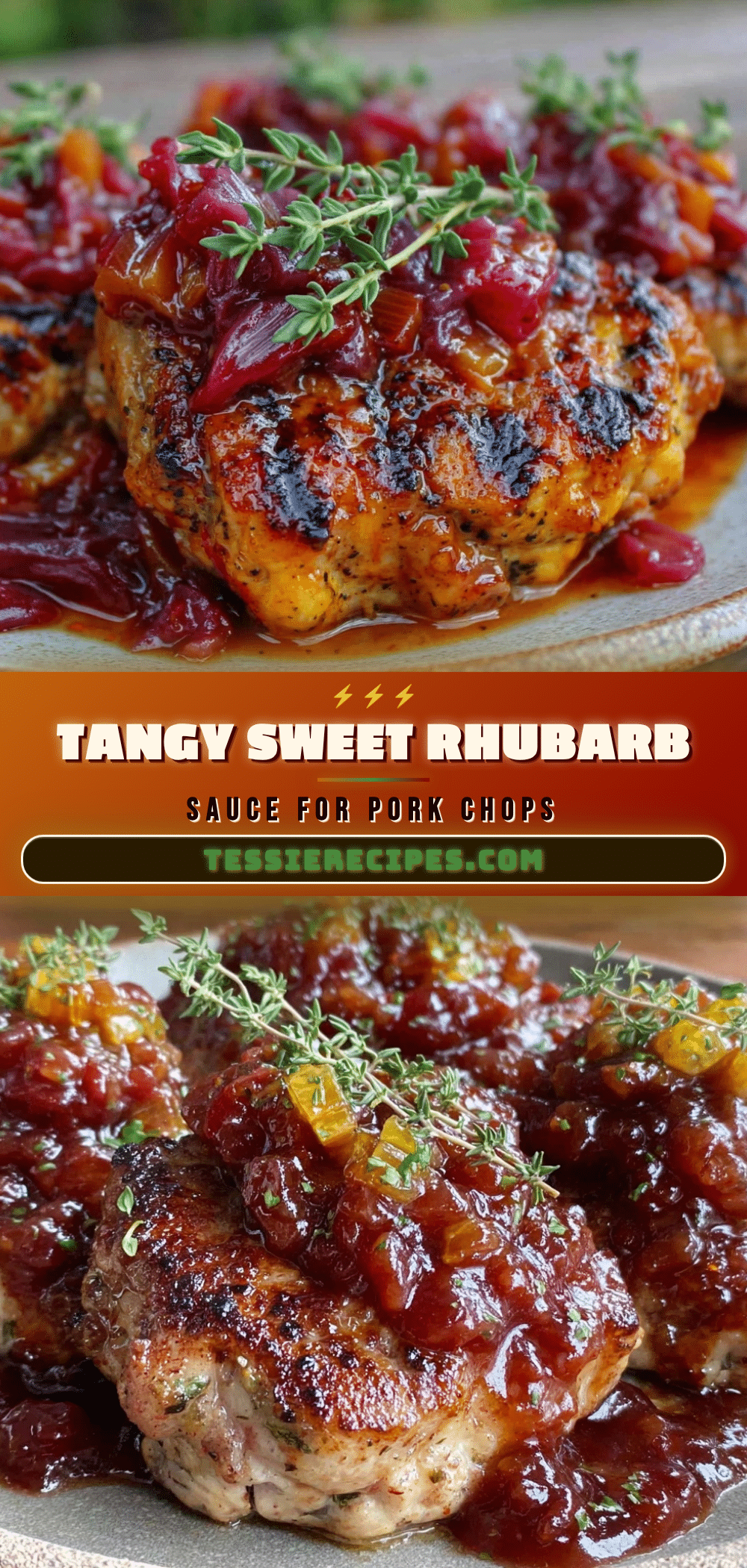
Tangy Rhubarb Sauce for Pork Chops and Chicken

A quick and easy tangy rhubarb sauce that pairs perfectly with pork chops and chicken, balancing tartness with mellow sweetness and warm spices.
- Prep Time: 10 minutes
- Cook Time: 15 minutes
- Total Time: 25 minutes
- Yield: About 6 servings (2 tablespoons per serving) 1x
- Category: Sauce
- Cuisine: American
Ingredients
- 3 cups fresh rhubarb stalks, chopped into 1/2-inch pieces (about 375g or 13.2 oz)
- 3/4 cup granulated sugar (150g or 5.3 oz)
- 1/2 cup water (120ml or 4 fl oz)
- 2 tablespoons apple cider vinegar
- 1 teaspoon Dijon mustard
- 1/4 teaspoon ground ginger
- 1/4 teaspoon cinnamon
- 1/4 teaspoon salt
- 1/8 teaspoon freshly ground black pepper
- 1 tablespoon unsalted butter
Instructions
- Wash and chop about 3 cups (375g) of fresh rhubarb stalks into 1/2-inch pieces. If using frozen, no need to thaw first.
- In a medium saucepan, add rhubarb, 3/4 cup (150g) granulated sugar, and 1/2 cup (120ml) water. Stir gently to mix.
- Place the saucepan over medium heat. Stir occasionally until the mixture comes to a gentle simmer, about 5 minutes.
- Stir in 2 tablespoons apple cider vinegar, 1 teaspoon Dijon mustard, 1/4 teaspoon ground ginger, 1/4 teaspoon cinnamon, 1/4 teaspoon salt, and 1/8 teaspoon freshly ground black pepper.
- Reduce heat to low and let the sauce simmer uncovered, stirring every few minutes, until the rhubarb breaks down and the sauce thickens slightly — about 10-15 minutes. It should coat the back of a spoon but still have a little texture.
- If you prefer a smoother or thicker sauce, mix 1 teaspoon cornstarch with 1 tablespoon cold water, then stir into the sauce and cook for 1-2 more minutes until thickened.
- Remove the sauce from heat and stir in 1 tablespoon of unsalted butter until melted and glossy.
- Taste and add a pinch more salt or sugar if needed.
- Serve warm over freshly cooked pork chops or chicken breasts.
Notes
Keep heat low and simmer gently to avoid burning. Stir often to maintain smooth texture. For a smoother sauce, blend or strain half or all of the sauce. Substitute honey or maple syrup for sugar for a richer sweetness. Use arrowroot powder instead of cornstarch for gluten-free thickening. Replace butter with dairy-free margarine or coconut oil for a vegan version.
Nutrition
- Serving Size: 2 tablespoons (about
- Calories: 60
- Sugar: 13
- Sodium: 150
- Fat: 0.2
- Saturated Fat: 0.1
- Carbohydrates: 16
- Fiber: 1
- Protein: 0.3
Keywords: rhubarb sauce, tangy sauce, pork chop sauce, chicken sauce, easy sauce recipe, homemade rhubarb sauce, savory rhubarb sauce