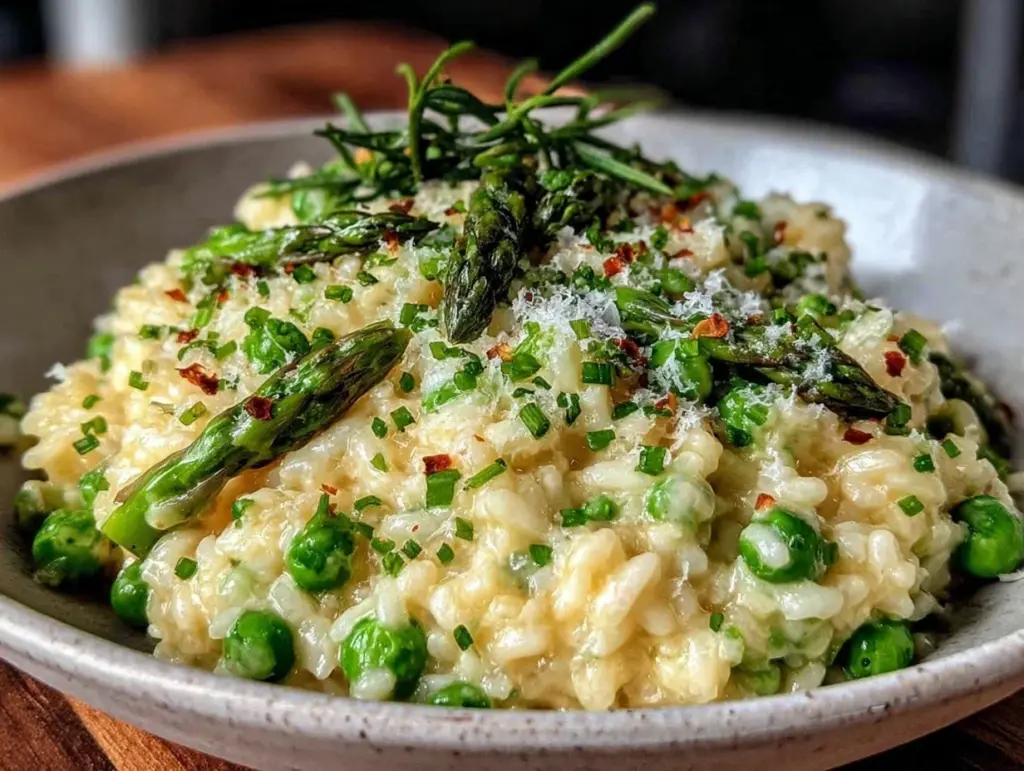
The aroma of simmering Arborio rice mingled with tender asparagus and sweet peas instantly takes me back to early spring afternoons in my kitchen. Honestly, there’s something about the creamy texture of a well-made risotto that feels like a warm hug, especially when it’s packed with fresh spring veggies. I first stumbled upon this creamy spring vegetable risotto with peas and asparagus during a weekend farmers’ market trip when the season’s first asparagus stalks caught my eye. Since then, it’s become one of my go-to recipes whenever I crave comfort food that doesn’t weigh me down.
This risotto isn’t just about taste; it’s a celebration of spring’s best ingredients, coming together in a dish that’s both satisfying and light. Whether you’re feeding a busy family, impressing guests, or just treating yourself, this recipe delivers a perfect balance of creamy richness and fresh vibrancy. I’ve made this dish countless times, testing small tweaks like swapping broth types or adjusting veggie ratios, to get that irresistible texture and flavor every time. If you’ve never tried making risotto at home, don’t worry—this recipe breaks it down in a way that even beginners can handle.
So if you’re ready to experience creamy spring vegetable risotto with peas and asparagus that’s easy to make and packed with fresh flavor, stick with me. I promise it’s worth every creamy, dreamy bite.
Why You’ll Love This Recipe
- Quick & Easy: Ready in about 40 minutes, perfect for weeknight dinners or last-minute guests.
- Simple Ingredients: Uses pantry staples and fresh spring vegetables—no fancy shopping trips required.
- Perfect for Spring: Highlights seasonal peas and asparagus, bringing the garden to your plate.
- Crowd-Pleaser: Creamy, comforting, with just the right hint of freshness—kids and adults love it alike.
- Unbelievably Delicious: The creamy risotto base pairs beautifully with the slight crunch and sweetness of fresh veggies.
This isn’t just any risotto recipe—it’s the one I trust to impress without stress. The secret? Slowly stirring the rice with warm broth, coaxing out its natural creaminess while letting the peas and asparagus shine. I like to add a splash of white wine for a subtle tang and finish with a generous handful of Parmesan for that classic, cheesy finish. It’s comfort food that feels lighter, fresher, and just downright satisfying.
Close your eyes after the first bite, and you’ll taste the essence of spring—vibrant, creamy, and comforting all at once. Whether you’re cooking for a special occasion or a simple family meal, this creamy spring vegetable risotto with peas and asparagus will quickly become a favorite.
What Ingredients You Will Need
This recipe calls for fresh, wholesome ingredients that come together to create a rich, creamy risotto bursting with springtime flavor. Most of these are pantry staples, with the fresh peas and asparagus bringing that seasonal touch.
- Arborio rice (1 ½ cups / 300 grams) – the star of risotto, known for its creamy texture.
- Fresh asparagus (1 bunch / about 12 spears) – trimmed and cut into 1-inch pieces, for that fresh crunch.
- Fresh or frozen peas (1 cup / 150 grams) – adds a pop of sweetness and color.
- Yellow onion (1 medium, finely chopped) – builds the flavor base.
- Garlic cloves (2, minced) – for a subtle aromatic kick.
- Vegetable or chicken broth (5 cups / 1.2 liters), warmed – essential for cooking the rice gently.
- Dry white wine (½ cup / 120 ml) – optional, but I highly recommend it for added depth.
- Unsalted butter (3 tablespoons / 45 grams) – for richness and that melt-in-your-mouth finish.
- Parmesan cheese (½ cup / 50 grams, grated) – brings savory creaminess.
- Olive oil (2 tablespoons) – for sautéing vegetables.
- Fresh lemon juice (1 tablespoon) – brightens the dish and balances richness.
- Salt and freshly ground black pepper – to taste.
Tips: Choose firm, bright green asparagus for the best texture; avoid overly woody stalks. If you can find fresh peas in the pod, shelling them adds an extra fresh touch, but frozen peas work just fine (and save time). For a dairy-free variation, swap butter for vegan margarine and skip the Parmesan or use a plant-based cheese alternative. I often use a good quality broth like Swanson or Pacific Foods for a rich base, but homemade broth makes it even better.
Equipment Needed
- Large heavy-bottomed skillet or sauté pan: Big enough to comfortably stir the risotto without spilling.
- Medium saucepan: To keep broth warm throughout cooking. A warm broth is key to creamy risotto!
- Wooden spoon or heatproof silicone spatula: For stirring the risotto gently without mashing the rice.
- Measuring cups and spoons: For precise ingredient amounts.
- Chef’s knife and cutting board: To prep the vegetables safely and efficiently.
If you don’t have a heavy-bottomed pan, just avoid anything too thin that could cause hot spots and burning. I’ve found that non-stick pans make stirring easier, but stainless steel works great too. Keeping your broth warm in a small saucepan next to your stove helps speed up the process and keeps the risotto from cooling down during cooking. No fancy equipment needed—just a little patience and a gentle stir now and then.
Detailed Preparation Method
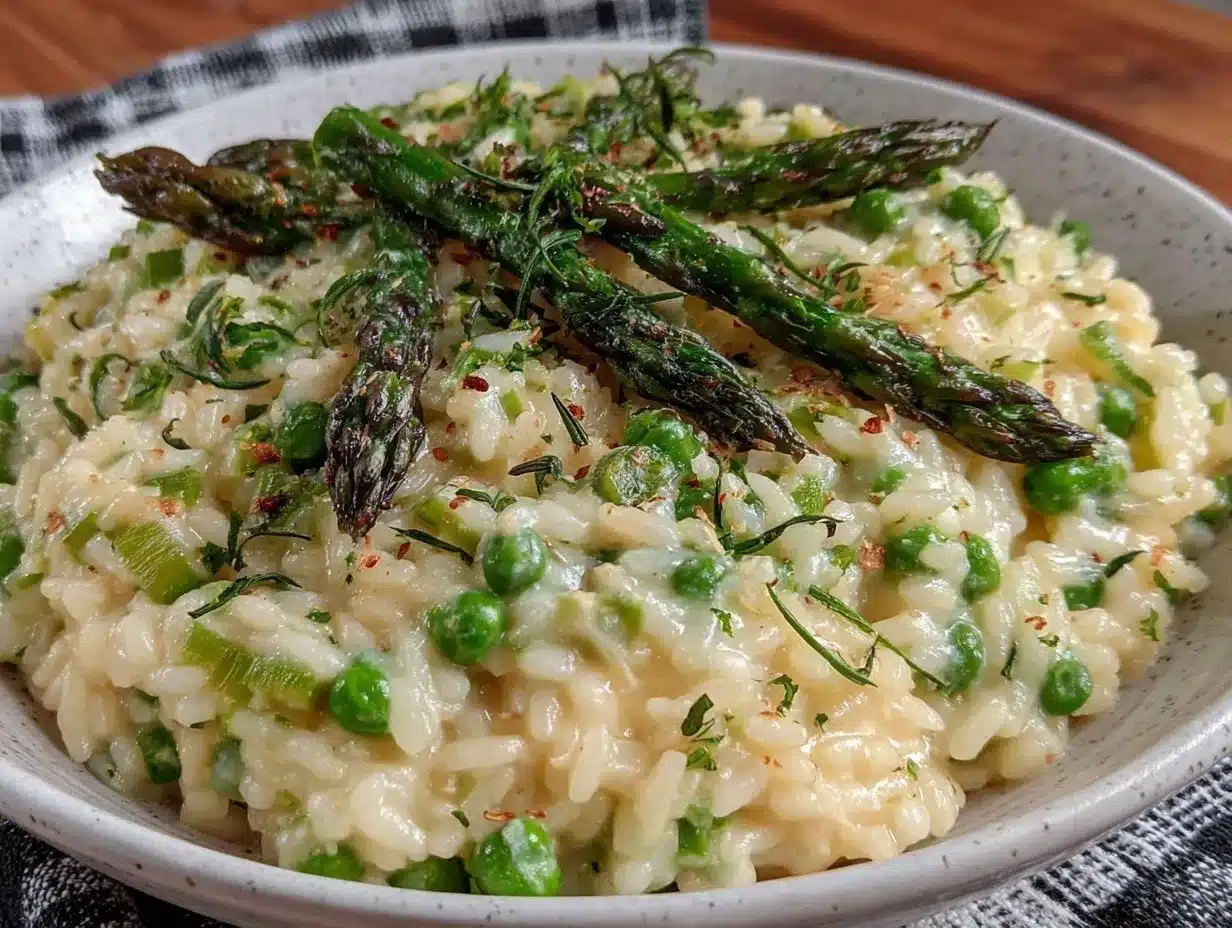
- Prep the broth and vegetables (10 minutes): Heat your vegetable or chicken broth in a medium saucepan over low heat; keep it simmering gently. Meanwhile, trim the asparagus ends and slice into 1-inch pieces. If using fresh peas, shell them now. Finely chop the onion and mince the garlic.
- Sauté the aromatics (5 minutes): In a large heavy-bottomed pan, heat 2 tablespoons olive oil over medium heat. Add the chopped onion and cook until translucent and soft, about 3-4 minutes. Toss in the garlic and stir for another 30 seconds until fragrant—but don’t let it brown.
- Toast the rice (2 minutes): Add the Arborio rice to the pan with the onions and garlic. Stir constantly so each grain is coated in oil and slightly toasted. This helps build flavor and texture. The rice should look translucent around the edges but still opaque in the center.
- Deglaze with wine (optional, 2 minutes): Pour in the white wine and stir gently until mostly absorbed. This adds a subtle acidity that balances the creamy risotto.
- Begin adding broth (25-30 minutes): Add about ½ cup (120 ml) of warm broth to the rice. Stir gently and continuously until the liquid is mostly absorbed. Repeat, adding broth ½ cup at a time, stirring often. This slow absorption releases the rice’s starches and creates that signature creamy texture.
- Add vegetables midway (10 minutes into broth additions): Once you’ve used about half the broth and the rice is starting to soften, stir in the asparagus pieces and peas. Continue adding broth and stirring until the rice is tender but still slightly firm to the bite (al dente).
- Finish with butter, cheese, and lemon (2 minutes): Remove the pan from heat. Stir in the butter, grated Parmesan, and fresh lemon juice. Season with salt and freshly ground black pepper to taste. The risotto should be creamy and slightly loose; if it looks too thick, stir in a little extra warm broth or water.
- Rest and serve: Cover the pan for a minute or two to let everything meld together. Give it a final gentle stir and serve immediately.
Tips: Keep your broth warm and add it gradually to avoid stopping the cooking process. Stirring constantly may sound tedious, but it’s key for creamy risotto—plus, it’s a relaxing kitchen ritual! If you notice the rice sticking, add broth sooner next time or lower the heat slightly. The asparagus should be tender but still have a little snap, giving a nice contrast to the creamy rice.
Cooking Tips & Techniques
- Use warm broth: Adding cold broth cools down the cooking process, which affects the rice’s texture. Keep your stock warm on low heat next to your stove.
- Don’t rush the stirring: Stirring encourages the rice to release its starch, which creates that signature creamy risotto texture. I know it sounds like a lot of work, but the results are worth it!
- Choose the right rice: Arborio rice is ideal because of its high starch content. Other short-grain varieties like Carnaroli or Vialone Nano work well, too.
- Watch the liquid ratio: Too much liquid too fast makes the risotto soupy; too little makes it dry. Add broth slowly—half a cup at a time—and wait for absorption before adding more.
- Season gradually: Add salt in small amounts during cooking and adjust at the end. Parmesan adds saltiness, so don’t overdo it at the start.
- Vegetable timing matters: Add delicate veggies like peas and asparagus midway so they retain their texture and color without getting mushy.
- Don’t skip the finishing touch: Butter and cheese at the end add richness and silkiness. It’s like the final polish on a masterpiece.
I’ve had my fair share of mushy or burnt risottos before getting the hang of it—so trust me, patience and gentle stirring are your best friends here. If your risotto looks a little thick at the end, stir in a splash of warm broth or water to loosen it up before serving.
Variations & Adaptations
- Vegan version: Use vegetable broth, swap butter for a vegan alternative, and replace Parmesan with nutritional yeast or vegan cheese.
- Gluten-free: Naturally gluten-free as long as your broth and wine are gluten-free certified. Double-check labels if sensitive.
- Seasonal swaps: In late spring or summer, swap peas and asparagus for fresh fava beans, artichokes, or zucchini ribbons for a different veggie twist.
- Protein boost: Stir in cooked shrimp, grilled chicken, or crispy pancetta for a heartier meal.
- Herb variations: Mix in fresh herbs like basil, tarragon, or chives at the end for extra aroma and color.
I once tried adding lemon zest along with the juice and a handful of toasted pine nuts on top—it was a lovely, nutty contrast to the creamy risotto. Feel free to experiment to find your personal favorite version of this creamy spring vegetable risotto with peas and asparagus.
Serving & Storage Suggestions
Serve this creamy spring vegetable risotto hot and fresh for the best texture. Spoon it onto warm plates and sprinkle a little extra Parmesan and freshly ground black pepper on top. A light drizzle of good-quality olive oil or a few fresh herb leaves makes it look restaurant-worthy.
This risotto pairs wonderfully with a crisp green salad, roasted chicken, or simply a glass of chilled white wine to complement the lemony brightness.
To store leftovers, transfer to an airtight container and refrigerate for up to 2 days. Risotto tends to thicken once cooled, so when reheating, warm gently on the stove or microwave and stir in a splash of broth or water to loosen the texture. The flavors often deepen after resting overnight, making the next-day risotto surprisingly delicious.
Nutritional Information & Benefits
This creamy spring vegetable risotto with peas and asparagus is a nourishing dish featuring whole-food ingredients. A typical serving contains roughly 350-400 calories, with a balanced mix of carbohydrates from Arborio rice and fiber plus vitamins from fresh peas and asparagus.
Asparagus is rich in folate, vitamin K, and antioxidants, while peas provide plant-based protein and vitamin C. Using vegetable broth keeps the dish light, and the Parmesan adds calcium and a touch of protein. This recipe fits well into a gluten-free diet and can be adapted for vegan or low-sodium needs.
From my experience as someone mindful of balanced meals, this risotto feels indulgent without the guilt—comfort food that’s also a gentle boost for your body.
Conclusion
In the end, this creamy spring vegetable risotto with peas and asparagus is more than just a meal—it’s a celebration of fresh flavors and simple cooking done right. Whether you’re new to risotto or a seasoned pro, this recipe offers a perfect balance of creamy texture and vibrant veggies that’s hard to resist.
Feel free to tweak the veggies, add your favorite herbs, or boost the protein to make it your own. I love this dish because it captures the essence of spring in every bite and brings a little joy to my table any day of the week.
Give it a try, share your thoughts, or tell me about your own risotto adventures in the comments below. I’m excited to hear how you make this recipe your own!
Happy cooking and happy eating!
FAQs About Creamy Spring Vegetable Risotto with Peas and Asparagus
Can I make this risotto ahead of time?
You can prepare it a few hours ahead, but risotto is best served fresh. If storing, keep it refrigerated and add a splash of broth when reheating to restore creaminess.
What can I use instead of Arborio rice?
Carnaroli or Vialone Nano rice are excellent alternatives. Avoid long-grain rice as it won’t produce the same creamy texture.
Can I use frozen asparagus and peas?
Yes! Frozen veggies work well—just add them a little earlier in the cooking process so they heat through without becoming mushy.
Is this recipe suitable for vegans?
Absolutely! Use vegetable broth, replace butter with vegan margarine, and skip or substitute Parmesan with a plant-based cheese.
How do I know when the risotto is done?
The rice should be tender but still have a slight bite (al dente). The dish should be creamy and slightly loose, not dry or gluey.
Pin This Recipe!

Creamy Spring Vegetable Risotto with Peas and Asparagus

A creamy and comforting risotto featuring fresh spring vegetables like peas and asparagus, perfect for a light yet satisfying meal.
- Prep Time: 15 minutes
- Cook Time: 25 minutes
- Total Time: 40 minutes
- Yield: 4 servings 1x
- Category: Main Course
- Cuisine: Italian
Ingredients
- 1 ½ cups (300 grams) Arborio rice
- 1 bunch (about 12 spears) fresh asparagus, trimmed and cut into 1-inch pieces
- 1 cup (150 grams) fresh or frozen peas
- 1 medium yellow onion, finely chopped
- 2 garlic cloves, minced
- 5 cups (1.2 liters) vegetable or chicken broth, warmed
- ½ cup (120 ml) dry white wine (optional)
- 3 tablespoons (45 grams) unsalted butter
- ½ cup (50 grams) grated Parmesan cheese
- 2 tablespoons olive oil
- 1 tablespoon fresh lemon juice
- Salt and freshly ground black pepper, to taste
Instructions
- Heat vegetable or chicken broth in a medium saucepan over low heat; keep it simmering gently.
- Trim asparagus ends and slice into 1-inch pieces. Shell fresh peas if using. Finely chop onion and mince garlic.
- In a large heavy-bottomed pan, heat olive oil over medium heat. Add chopped onion and cook until translucent, about 3-4 minutes.
- Add garlic and stir for 30 seconds until fragrant, avoiding browning.
- Add Arborio rice to the pan and stir constantly for about 2 minutes until rice is coated and slightly toasted.
- Pour in white wine (if using) and stir gently until mostly absorbed, about 2 minutes.
- Add about ½ cup warm broth to the rice. Stir gently and continuously until liquid is mostly absorbed. Repeat adding broth ½ cup at a time, stirring often, for 25-30 minutes.
- After using about half the broth and when rice starts to soften, stir in asparagus pieces and peas. Continue adding broth and stirring until rice is tender but still slightly firm (al dente).
- Remove pan from heat. Stir in butter, grated Parmesan, and fresh lemon juice. Season with salt and pepper to taste. If risotto is too thick, stir in a little extra warm broth or water.
- Cover pan for 1-2 minutes to let flavors meld. Give a final gentle stir and serve immediately.
Notes
Keep broth warm throughout cooking to ensure creamy texture. Stir constantly to release rice starch. Add vegetables midway to retain their texture and color. For dairy-free, use vegan butter and cheese alternatives. If risotto is too thick at the end, loosen with warm broth or water.
Nutrition
- Serving Size: 1 cup risotto per se
- Calories: 375
- Sugar: 5
- Sodium: 600
- Fat: 12
- Saturated Fat: 6
- Carbohydrates: 52
- Fiber: 4
- Protein: 10
Keywords: risotto, spring vegetables, peas, asparagus, creamy risotto, easy dinner, vegetarian, gluten-free