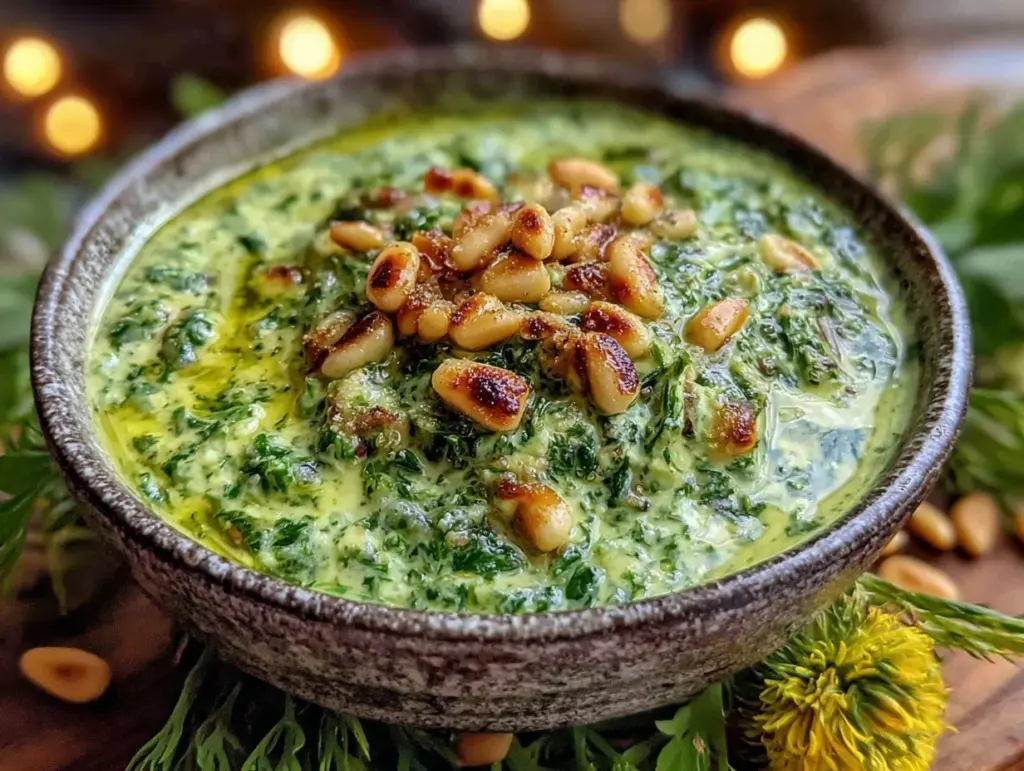
It was one of those early spring afternoons when the neighborhood yard looks like a green sea peppered with bright yellow dandelion heads. I was out grabbing some garden clippings when a sudden thought struck me: what if those pesky weeds could actually become dinner? Honestly, I’d always dismissed dandelions as just stubborn invaders in the lawn, but that day, curiosity nudged me toward experimenting with what I had on hand.
I remembered a friend once mentioning dandelion greens as a wild edible, and with a quick search, I stumbled upon the idea of dandelion pesto. Skeptical but intrigued, I pulled a bunch of freshly picked dandelion leaves, toasted some pine nuts (because, well, pine nuts make everything better), and whipped up a batch. The result? A vibrant, slightly bitter but utterly fresh pesto that surprised me with its depth and brightness. It was like spring captured in a jar, a reminder that sometimes the best flavors come from the unexpected.
Since that first batch, I found myself making fresh dandelion pesto with toasted pine nuts multiple times a week, especially when I wanted something quick yet deeply satisfying. The recipe stuck because it’s simple, honest, and full of character—just like those wild greens themselves. If you’re someone who loves a little culinary adventure or just wants a way to use what nature offers, this pesto might quietly become your new favorite.
Why You’ll Love This Fresh Dandelion Pesto Recipe with Toasted Pine Nuts
This fresh dandelion pesto recipe is honestly one of those kitchen wins that feels both fancy and down-to-earth. After testing it several times, here’s why it’s become a staple in my rotation:
- Quick & Easy: Comes together in about 15 minutes, making it perfect for busy weeknights or when you want a fresh, homemade sauce without fuss.
- Simple Ingredients: Uses common pantry staples like pine nuts and olive oil, plus fresh dandelion greens that you can forage or buy at specialty markets.
- Perfect for Spring & Summer: This pesto shines when dandelion greens are young and tender – ideal for seasonal meals and outdoor picnics.
- Crowd-Pleaser: The toasted pine nuts add a buttery crunch that balances the slight bitterness of dandelions, making it approachable for even picky eaters.
- Unbelievably Delicious: The vibrant green color, fresh herbal aroma, and nutty undertones combine into a pesto that feels like a celebration of wild flavors.
What sets this recipe apart is the way it respects the unique taste of dandelion greens rather than masking it. Toasting pine nuts adds a warm, nutty depth that complements the greens’ earthiness. It’s not just pesto—it’s a fresh, unexpected twist on a classic that feels both grounded and exciting.
This isn’t about reinventing the wheel but about trusting simple ingredients to shine. Whether you’re slathering it on toast, tossing it with pasta, or stirring it into soups, it brings a little wild magic to your table.
What Ingredients You Will Need
This fresh dandelion pesto recipe relies on straightforward, wholesome ingredients that come together to create a bold, satisfying flavor. Most of these are pantry staples or easy to find if you’re foraging or shopping at farmers’ markets.
- Fresh dandelion greens – about 4 cups, washed and roughly chopped (young leaves work best for less bitterness)
- Toasted pine nuts – ½ cup (toasting brings out that rich, buttery flavor; I prefer using Italian pine nuts for their delicate size and taste)
- Garlic cloves – 2 medium, peeled (adds the essential punch and aroma)
- Extra virgin olive oil – ½ cup (use a fruity, high-quality brand like Colavita for best flavor)
- Fresh lemon juice – 1 tablespoon (brightens and balances the bitterness)
- Grated Parmesan cheese – ¼ cup (optional, but adds a savory depth; substitute with nutritional yeast for vegan option)
- Salt – to taste (I recommend sea salt for subtle mineral notes)
- Freshly ground black pepper – a pinch (for mild warmth and contrast)
If you can’t get pine nuts, lightly toasted walnuts or almonds can also work well. And if dandelion greens aren’t available, kale or arugula make decent stand-ins, though the flavor won’t have that same wild, grassy bite.
Equipment Needed
- Food processor or high-speed blender: Essential for blending the dandelion greens into a smooth, spreadable pesto.
- Small skillet or frying pan: For toasting pine nuts evenly without burning.
- Measuring cups and spoons: To keep ingredient ratios balanced.
- Spatula: For scraping down the sides of the processor bowl.
- Glass jar or airtight container: For storing the pesto in the fridge.
If you don’t have a food processor, a sturdy blender can work, but you might need to pulse and scrape more often. For pine nut toasting, keep a close eye—the nuts can go from golden to burnt in seconds! I’ve also found that a non-stick pan makes cleanup easier.
Preparation Method
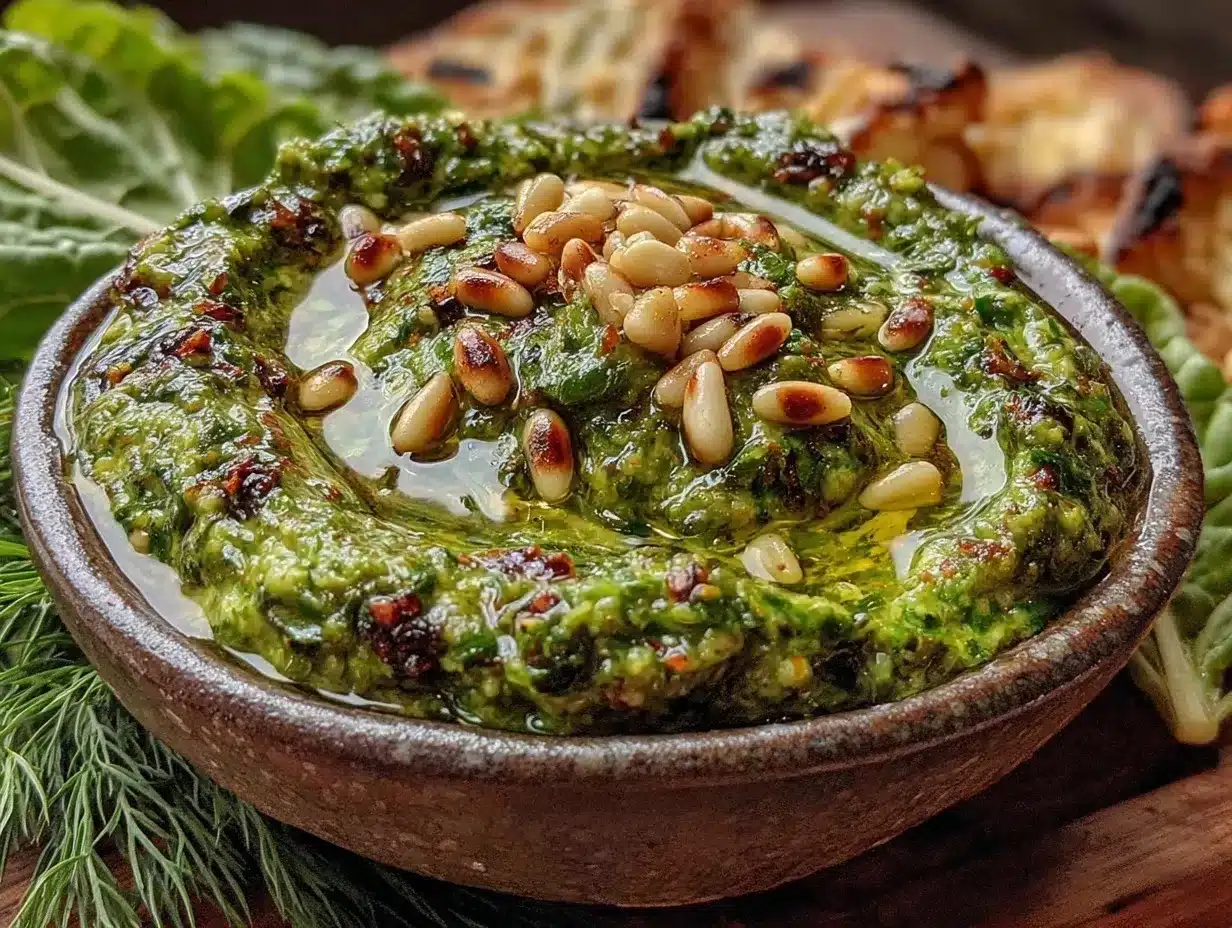
- Wash and prep the dandelion greens: Rinse about 4 cups of fresh dandelion greens under cold water to remove any grit. Pat dry with a clean towel or use a salad spinner. Roughly chop the greens to help the processor along. (Prep time: 5 minutes)
- Toast the pine nuts: Heat a small dry skillet over medium heat. Add ½ cup pine nuts and stir frequently for 3-5 minutes until golden and fragrant. Remove from heat and let cool. (Watch carefully to avoid burning.)
- Combine ingredients in the food processor: Add the dandelion greens, cooled pine nuts, 2 peeled garlic cloves, ¼ cup grated Parmesan (if using), 1 tablespoon fresh lemon juice, and a pinch of salt and pepper.
- Pulse to start blending: Pulse the mixture a few times to begin breaking down the greens and nuts.
- Slowly add olive oil: With the processor running, drizzle in ½ cup extra virgin olive oil until the pesto reaches a smooth, spreadable consistency. You may need to stop and scrape down the sides to incorporate everything evenly. (Total blending time about 1 minute)
- Taste and adjust: Give your pesto a taste. Add more salt, pepper, or lemon juice if needed to balance the flavors. If it’s too thick, add a teaspoon or two of water or more olive oil to loosen it up.
- Store or serve: Transfer the pesto to a clean jar and cover with a thin layer of olive oil to preserve freshness. Refrigerate and use within a week. (Makes about 1 cup)
Cooking Tips & Techniques
Making fresh dandelion pesto isn’t tricky, but a few tips can really help you get the best from your ingredients:
- Choosing greens: Younger dandelion leaves are less bitter and more tender. If you end up with mature leaves, blanching them briefly in boiling water can mellow the bitterness.
- Toast nuts gently: Pine nuts burn easily, so keep the heat moderate and stir constantly. The aroma is your best guide—they’ll smell nutty and warm when done.
- Balance the bitterness: Lemon juice and salt are your friends here. Don’t hesitate to add a little extra lemon if the pesto tastes too sharp or bitter.
- Texture matters: If you prefer chunkier pesto, pulse less. For ultra-smooth, blend a bit longer and add more oil.
- Storage tip: To prevent browning, pour a thin layer of olive oil on top before sealing and refrigerate. This keeps the pesto fresh and vibrant longer.
When I first made this pesto, I underestimated how strong dandelion greens can be. After a few tweaks—like adding extra lemon and toasting nuts more carefully—I found a balance that works every time.
Variations & Adaptations
This fresh dandelion pesto recipe is versatile and adapts well to different tastes and dietary needs:
- Vegan Version: Skip the Parmesan and add nutritional yeast for cheesy flavor without dairy.
- Nut-Free: Replace pine nuts with toasted sunflower seeds or pumpkin seeds to avoid allergens.
- Spicy Kick: Add a pinch of red pepper flakes or a small fresh chili for some heat.
- Cheese Swap: Use Pecorino Romano or aged Asiago for a sharper, tangier twist.
- Seasonal Twist: In late spring or early summer, mix in fresh basil or parsley for a more classic pesto flavor.
Once, I experimented by adding a little roasted garlic instead of raw, which mellowed the pungency and gave it a smoky edge—definitely worth trying if you like deeper flavors.
Serving & Storage Suggestions
This fresh dandelion pesto is best served at room temperature or slightly chilled. Here’s how I like to enjoy it:
- On toasted bread or crostini: A simple and satisfying snack or appetizer.
- Tossed with pasta: Stir the pesto into freshly cooked spaghetti or penne for a quick dinner.
- As a dip: Serve alongside fresh veggies or crackers for a bright, herby twist.
- With grilled meats or fish: Spoon over chicken breasts, salmon, or roasted vegetables for extra flavor.
Store leftover pesto in an airtight container in the refrigerator for up to 7 days. For longer storage, freeze in ice cube trays and transfer frozen cubes to a zip-top bag—perfect for portioned use later. When reheating, warm gently or add directly to hot dishes to preserve the fresh flavor.
Flavors tend to deepen after a day or two in the fridge, so sometimes I make it ahead and find it tastes even better the next day.
Nutritional Information & Benefits
This fresh dandelion pesto is packed with nutrients and offers several health perks:
- Dandelion greens: Rich in vitamins A, C, and K, plus antioxidants and fiber.
- Pine nuts: Provide heart-healthy fats, protein, and essential minerals like magnesium and zinc.
- Olive oil: A source of monounsaturated fats linked to reduced inflammation and heart health.
Per serving (about 2 tablespoons), this pesto contains roughly 120 calories, mostly from healthy fats, with minimal carbs and protein. It’s naturally gluten-free and can be made vegan easily by skipping cheese.
From a wellness standpoint, this pesto feels like a fresh, nourishing boost—perfect when you want something wholesome without sacrificing flavor.
Conclusion
Fresh dandelion pesto with toasted pine nuts isn’t just a recipe—it’s a little reminder that some of the best flavors come from the wild corners of our world. It’s quick, easy, and surprisingly bright, turning humble greens into a vibrant sauce that livens up any meal.
Feel free to tweak the ingredients to suit your palate—whether you want it zestier, nuttier, or dairy-free, this pesto welcomes your personal touch. For me, it’s become a quiet favorite, a kitchen ritual that connects me to the season and celebrates simple, honest food.
Give it a try, and I’d love to hear how your batch turns out or what unique twist you add. Here’s to discovering new flavors right outside your door!
FAQs about Fresh Dandelion Pesto with Toasted Pine Nuts
- Can I use mature dandelion leaves for this pesto?
Yes, but mature leaves are more bitter. Blanching them briefly in boiling water can reduce bitterness before blending. - How do I store leftover pesto?
Keep it in an airtight container in the fridge for up to a week, with a thin olive oil layer on top to prevent browning. You can also freeze it in portions. - Are there good substitutes for pine nuts?
Toasted walnuts, almonds, sunflower seeds, or pumpkin seeds work well as alternatives, especially for nut allergies. - Is this pesto suitable for vegans?
Absolutely! Simply omit the Parmesan cheese or replace it with nutritional yeast for a cheesy flavor. - Can I make this pesto without a food processor?
You can finely chop the ingredients by hand, but a processor or blender makes it quicker and smoother.
Pin This Recipe!
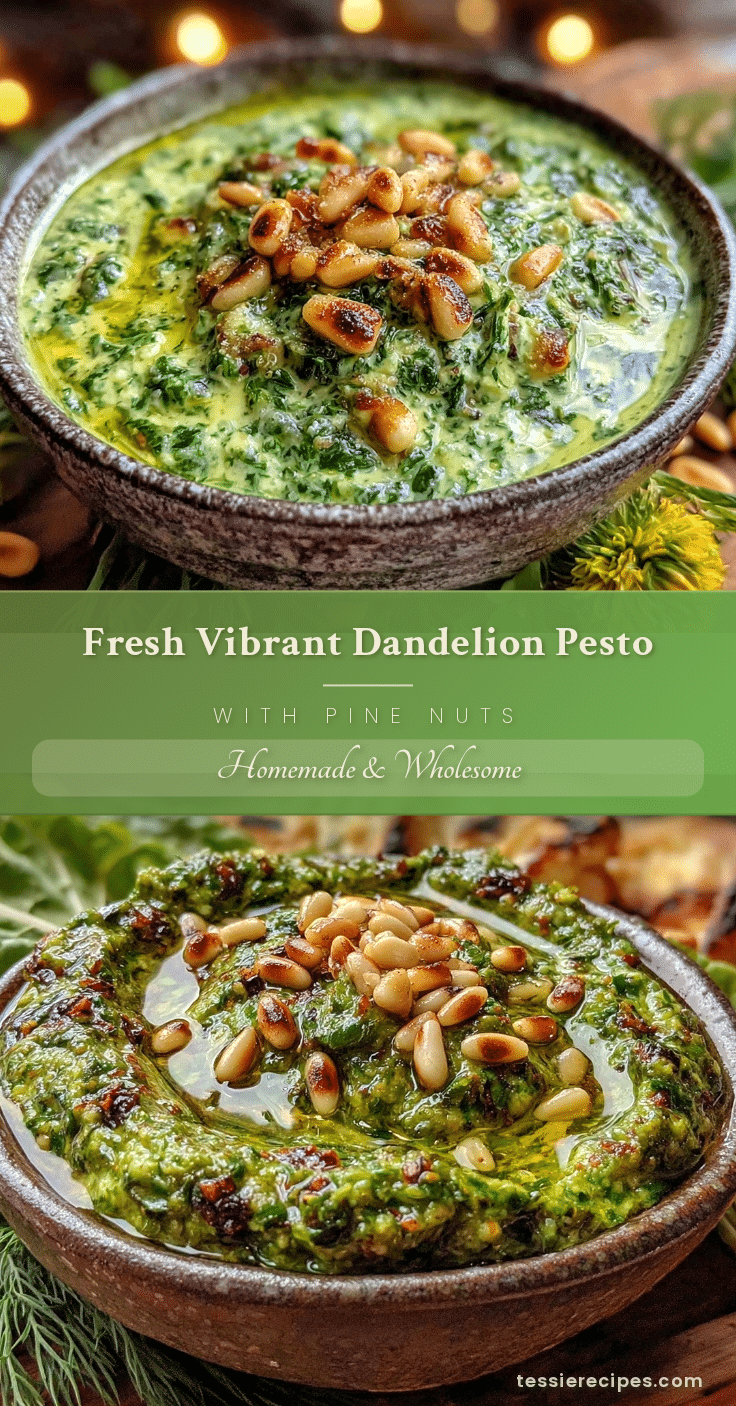
Fresh Dandelion Pesto Recipe with Toasted Pine Nuts
A vibrant and fresh pesto made from wild dandelion greens and toasted pine nuts, perfect for spring and summer meals. This quick and easy recipe offers a slightly bitter, nutty flavor that celebrates wild, wholesome ingredients.
- Prep Time: 10 minutes
- Cook Time: 5 minutes
- Total Time: 15 minutes
- Yield: About 1 cup (approximately 8 servings of 2 tablespoons each) 1x
- Category: Sauce
- Cuisine: American, Wild Foraged
Ingredients
- 4 cups fresh dandelion greens, washed and roughly chopped
- 1/2 cup toasted pine nuts
- 2 medium garlic cloves, peeled
- 1/2 cup extra virgin olive oil
- 1 tablespoon fresh lemon juice
- 1/4 cup grated Parmesan cheese (optional, substitute with nutritional yeast for vegan)
- Salt to taste
- Freshly ground black pepper, a pinch
Instructions
- Rinse about 4 cups of fresh dandelion greens under cold water to remove any grit. Pat dry with a clean towel or use a salad spinner. Roughly chop the greens.
- Heat a small dry skillet over medium heat. Add 1/2 cup pine nuts and stir frequently for 3-5 minutes until golden and fragrant. Remove from heat and let cool.
- Add the dandelion greens, cooled pine nuts, 2 peeled garlic cloves, 1/4 cup grated Parmesan (if using), 1 tablespoon fresh lemon juice, and a pinch of salt and pepper to a food processor.
- Pulse the mixture a few times to begin breaking down the greens and nuts.
- With the processor running, slowly drizzle in 1/2 cup extra virgin olive oil until the pesto reaches a smooth, spreadable consistency. Stop and scrape down the sides as needed.
- Taste and adjust seasoning with more salt, pepper, or lemon juice if needed. Add a teaspoon or two of water or more olive oil to loosen if too thick.
- Transfer the pesto to a clean jar and cover with a thin layer of olive oil to preserve freshness. Refrigerate and use within a week.
Notes
Use younger dandelion leaves for less bitterness. Toast pine nuts gently to avoid burning. Add extra lemon juice to balance bitterness. Store pesto with a thin olive oil layer on top to prevent browning. Can substitute pine nuts with toasted walnuts, almonds, sunflower seeds, or pumpkin seeds. Vegan option by omitting Parmesan and using nutritional yeast.
Nutrition
- Serving Size: 2 tablespoons
- Calories: 120
- Sugar: 0.5
- Sodium: 100
- Fat: 12
- Saturated Fat: 1.5
- Carbohydrates: 2
- Fiber: 1
- Protein: 2
Keywords: dandelion pesto, toasted pine nuts, wild greens, homemade pesto, spring recipe, vegan pesto option, easy pesto recipe