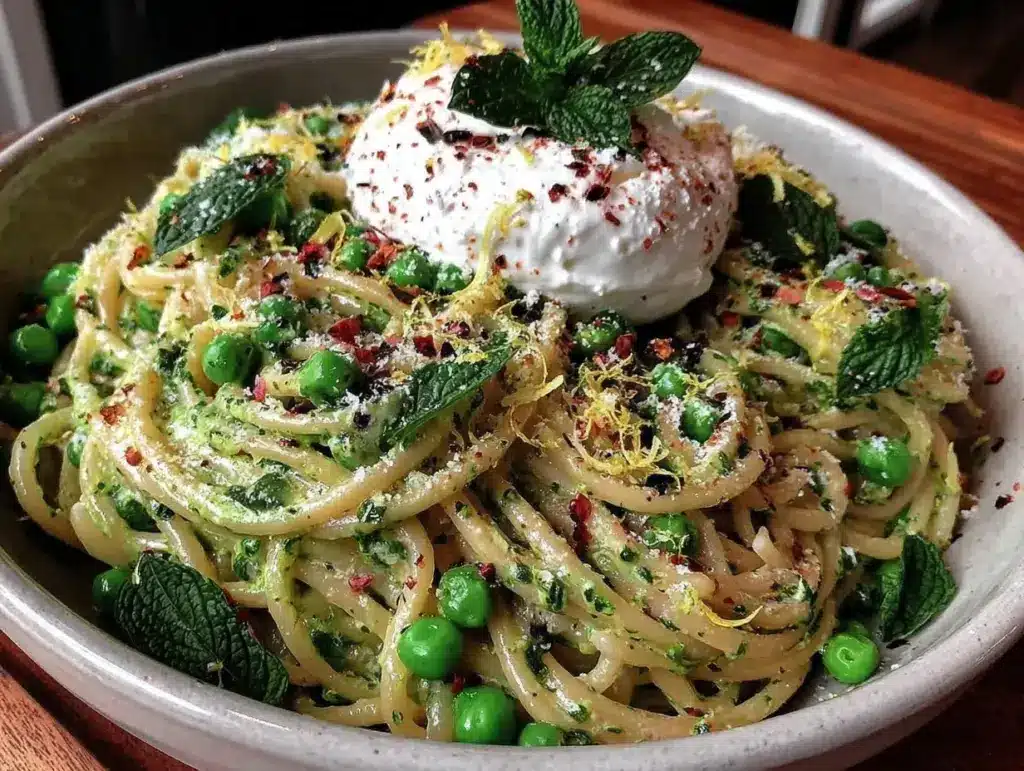
“You’ve got to try this,” my friend insisted over a quick text, sending me a photo of a vibrant bowl of pasta adorned with bright green peas and a luscious dollop of burrata. Honestly, I was skeptical at first—spring peas and burrata? It sounded like one of those fancy restaurant dishes I’d never pull off at home. But the idea of fresh, light flavors after a winter full of heavy meals was too tempting to ignore.
That evening, I found myself chopping peas and zesting lemons in my quiet kitchen, the faint hum of the city outside mixing with the soft buzz of the stove. The pasta came together faster than I’d imagined, and the creamy burrata melting into the warm strands was… well, just magic. I ended up making this dish three times that week—yeah, I was officially hooked.
What really got me was how the lemon zest added that perfect zing, cutting through the creaminess without overpowering it. It’s a dish that feels both fresh and indulgent, like spring captured in a bowl. The recipe stuck with me because it’s simple but feels special, a little celebration of the season’s best produce—and a reminder that sometimes, the best meals come when you trust a friend’s offhand suggestion.
Why You’ll Love This Fresh Spring Pea Pasta Recipe
After testing this fresh spring pea pasta recipe with creamy burrata and zesty lemon multiple times, I can confidently say it’s a winner for so many reasons. It’s the kind of dish that never fails to impress, yet it’s surprisingly easy to make—honestly, it’s perfect for those busy evenings when you want something quick but still feel like you’re treating yourself.
- Quick & Easy: Ready in under 30 minutes, it’s ideal for weeknights or whenever spring cravings hit.
- Simple Ingredients: Uses pantry staples and fresh peas—no obscure items or special shopping required.
- Perfect for Spring Meals: Light, bright, and fresh, this pasta celebrates the season’s best flavors.
- Crowd-Pleaser: Whether you’re feeding family or friends, the creamy burrata and lemon zest combo always gets rave reviews.
- Unbelievably Delicious: The fresh peas add a subtle sweetness and texture, balanced by the rich burrata and tangy lemon zest.
What sets this pasta apart is the delicate balance of flavors and textures. Blending the creamy burrata right into the hot pasta while keeping the peas crisp brings a fresh yet comforting bite. Plus, the lemon zest adds that unexpected pop, making every forkful feel lively. I’ve tried other pea pastas before, but this version—with its simple technique and fresh ingredients—feels like the best version. It’s the kind of recipe that makes you pause and savor, closing your eyes to fully enjoy that bright, creamy goodness.
And let me tell you, it’s a real crowd-pleaser—perfect for a casual dinner that feels a little fancy without the fuss. If you’re into dishes like creamy garlic Tuscan chicken pasta, this fresh spring pea pasta will be a delightful, lighter complement to your repertoire.
What Ingredients You Will Need
This fresh spring pea pasta recipe uses simple, wholesome ingredients to deliver bold flavor and satisfying texture without the fuss. Many are pantry staples, which means no last-minute grocery run needed (hallelujah!). Here’s what you’ll gather:
- Pasta: 12 oz (340 g) of your favorite long pasta—spaghetti, linguine, or fettuccine all work well.
- Fresh spring peas: 1 ½ cups (about 225 g), shelled. If fresh peas aren’t available, frozen are a fine substitute (just blanch briefly).
- Burrata cheese: One ball (about 6-8 oz / 170-225 g). Look for creamy, fresh burrata from trusted brands like BelGioioso or local artisanal makers if possible.
- Lemon zest: Zest from one large lemon—this adds that bright, zesty kick the dish needs.
- Garlic: 2 cloves, minced to infuse subtle warmth.
- Olive oil: 3 tablespoons, extra virgin for best flavor.
- Fresh mint or basil: A small handful, chopped (optional but highly recommended for freshness).
- Parmesan cheese: ¼ cup (25 g), grated, for extra savory depth (optional).
- Salt and freshly ground black pepper: To taste.
- Red pepper flakes: A pinch, optional, if you want a gentle heat.
When selecting your peas, I find that fresh, young peas have a sweeter, more tender bite. If you’re using frozen peas, blanch them in boiling water for 1-2 minutes to keep that vibrant green color and fresh flavor. For burrata, the creamier and fresher, the better—it really makes the difference in texture and taste. And if you want to switch things up, swapping fresh mint for basil or vice versa offers a slightly different herbal note that’s equally delightful.
Equipment Needed
- Large pot: For boiling the pasta. A big pot helps prevent sticking and gives the peas room to blanch.
- Colander: To drain pasta and peas efficiently.
- Large skillet or sauté pan: For tossing the pasta with garlic, olive oil, and peas.
- Microplane or fine grater: For zesting the lemon. I recommend a microplane for easy, fluffy zest.
- Wooden spoon or tongs: To gently mix the pasta without breaking the delicate burrata.
- Sharp knife and cutting board: For prepping garlic, herbs, and lemon zest.
If you don’t have a microplane, a fine box grater works, but be careful not to grate the bitter white pith of the lemon. For budget-friendly options, a standard colander and a heavy-bottom skillet will do just fine. I’ve tried this recipe using different pans, and a non-stick skillet helps keep the pasta from sticking during the tossing phase, but a well-seasoned cast iron works too if you’re careful.
Preparation Method
- Bring a large pot of salted water to a boil. Add 1 tablespoon of salt to the water (about 15 g). This seasons the pasta and peas as they cook. Boil the pasta according to the package instructions until al dente—usually about 8-10 minutes for spaghetti. Save 1 cup (240 ml) of pasta water before draining.
- While the pasta cooks, blanch the peas. Add the fresh peas to the boiling water for about 1-2 minutes until bright green and tender-crisp. Then immediately plunge them into an ice bath or rinse under cold water to stop cooking and preserve color.
- Heat olive oil over medium heat in a large skillet. Add the minced garlic and sauté for 30 seconds to 1 minute until fragrant but not browned. Watch closely—garlic burns fast and turns bitter.
- Add the drained peas to the skillet. Toss gently with garlic for about 1 minute to warm through. If you like a bit of heat, sprinkle in a pinch of red pepper flakes here.
- Add the cooked pasta to the skillet. Pour in ½ cup (120 ml) of reserved pasta water and toss gently to combine. The starch in the water helps create a silky sauce that clings to the pasta.
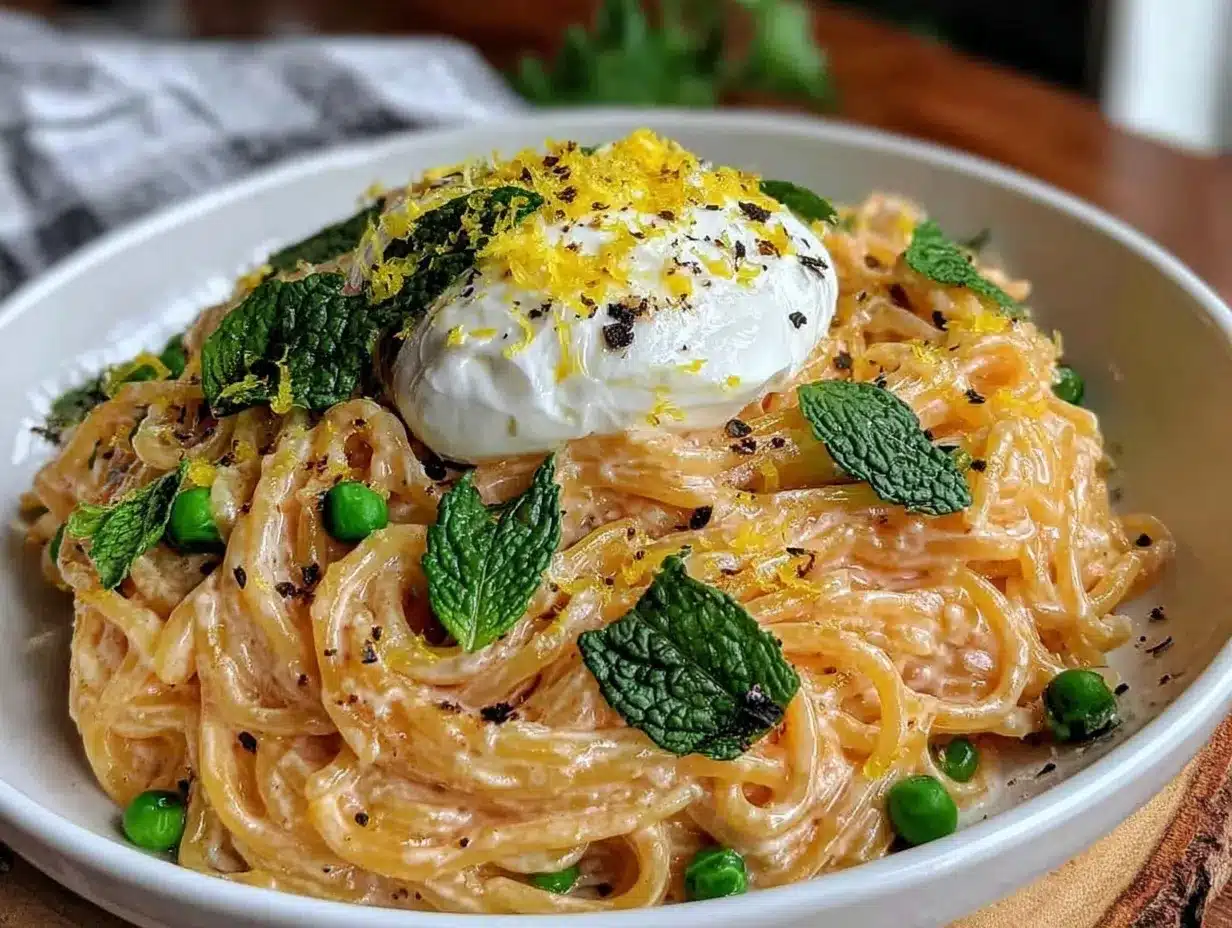
- Remove the skillet from heat. Tear the burrata into chunks and gently fold it into the pasta, letting it melt slightly into the warm noodles.
- Sprinkle lemon zest over the pasta. Toss gently again, then add freshly ground black pepper and chopped mint or basil if using.
- Serve immediately. Add extra parmesan on top if you like, and a drizzle of olive oil for shine.
Note: If the pasta feels dry, add more reserved pasta water a tablespoon at a time. The texture should be creamy but not soupy. Also, I’ve learned to tear the burrata by hand instead of slicing to keep its creamy interior intact.
Cooking Tips & Techniques
One thing I quickly realized is that timing is everything with this fresh spring pea pasta. The peas need to stay tender-crisp, not mushy, so blanching them just right is key. When cooking pasta, always salt your water generously—it’s your only chance to season the noodles deeply.
Garlic is so easy to overcook. It only needs a quick sauté until fragrant; anything longer, and it gets bitter. And trust me, I’ve burned more garlic than I’d like to admit.
When adding burrata, the pasta should be off the heat. The residual warmth melts the cheese gently, creating that luscious, creamy coating without turning it into a gooey mess.
Another tip—reserve plenty of pasta water. The starchy water is your secret weapon for a smooth, glossy sauce that sticks to every strand. And don’t forget the lemon zest at the end; it wakes up the whole dish.
If you’re juggling multiple dishes, prepare the lemon zest and herbs ahead to streamline the final toss. It’s a simple trick that keeps the process smooth and stress-free.
Variations & Adaptations
One of the best things about this recipe is its flexibility. Here are some ways to make it your own:
- Gluten-Free Option: Swap regular pasta for gluten-free spaghetti or zucchini noodles for a low-carb twist.
- Herb Swap: Use fresh tarragon or chives instead of mint or basil—both add a lovely aromatic touch.
- Protein Boost: Add grilled chicken, sautéed shrimp, or crispy pancetta for a heartier meal. I once paired this pasta with the loaded cream cheese stuffed mushrooms with bacon for a dinner party, and it was a hit.
- Seasonal Twist: In summer, toss in fresh peas with baby cherry tomatoes or swap burrata for fresh mozzarella.
- Dairy-Free: Use a creamy cashew cheese or omit the burrata and finish with a sprinkle of toasted pine nuts for richness.
Personally, I enjoy adding a touch of lemon juice at the end when I want a bit more brightness. It’s subtle but lifts the dish beautifully. Don’t be afraid to experiment with what you have on hand or what flavors you’re craving.
Serving & Storage Suggestions
This fresh spring pea pasta is best served warm, right after tossing in the burrata. The cheese is happiest at room temperature when it’s creamy and soft. Serve it in shallow bowls to showcase the vibrant green peas and creamy cheese.
Pair this dish with a crisp white wine like Sauvignon Blanc or a light sparkling water with lemon for a refreshing combo. For a more substantial meal, a crisp side salad or crusty bread complements the creamy pasta perfectly.
Leftovers can be stored in an airtight container in the refrigerator for up to 2 days. When reheating, do so gently in a skillet over low heat with a splash of water or broth to loosen the sauce—microwaving tends to make the burrata clump up and lose its silky texture.
Interestingly, the flavors meld even more after resting, making the dish taste richer the next day. Just add an extra sprinkle of fresh lemon zest before serving again to brighten it back up.
Nutritional Information & Benefits
This fresh spring pea pasta offers a balanced mix of carbs, protein, and healthy fats. A typical serving (about 1 ½ cups) provides approximately 450 calories, 18 grams of protein, and 15 grams of fat, mainly from the burrata and olive oil.
Peas are a great plant-based protein source and packed with fiber, vitamins A, C, and K, and antioxidants that support a healthy immune system. Burrata adds calcium and a creamy texture without overwhelming calories. The lemon zest brings vitamin C and antioxidants, helping boost overall wellness.
For those watching carbs, swapping pasta for spiralized vegetables can lighten the dish further. It’s naturally gluten-free if you choose gluten-free pasta, and by omitting the cheese, it can be adapted for dairy-free diets.
Overall, this pasta feels indulgent but is refreshingly wholesome—the kind of meal that satisfies your taste buds and keeps you energized.
Conclusion
This fresh spring pea pasta with creamy burrata and lemon zest is a recipe that made me rethink what a simple pasta dish can be. It’s fresh, vibrant, and surprisingly easy to whip up, yet it tastes like something you’d order at a cozy trattoria on a sunny afternoon.
Feel free to tweak the herbs, add your favorite proteins, or adjust the tang with more lemon zest to make it truly yours. I love this recipe because it brings a little spring into the kitchen no matter the weather outside—and it never fails to impress without stress.
If you try it, I’d love to hear how you made it your own or what twists you added. Cooking is about joy and sharing, and this pasta is a perfect way to do both.
Here’s to many more meals filled with fresh flavors and creamy comfort!
FAQs About Fresh Spring Pea Pasta with Creamy Burrata and Lemon Zest
Can I use frozen peas instead of fresh peas?
Yes! Frozen peas work well if fresh aren’t available. Just blanch them briefly in boiling water for 1-2 minutes to keep their bright color and tender-crisp texture.
What if I can’t find burrata cheese?
Fresh mozzarella is a good substitute, though it’s less creamy. You could also mix cream cheese with a little milk to mimic burrata’s texture.
How do I prevent the garlic from burning?
Cook garlic over medium heat and watch it closely. Remove from heat as soon as it’s fragrant and lightly golden—usually under a minute.
Can I prepare this pasta ahead of time?
It’s best enjoyed fresh, but you can make the components separately and toss them together just before serving. Leftovers reheat well on the stove with a splash of water.
Which pasta shapes work best?
Long, thin pastas like spaghetti, linguine, or fettuccine are ideal because they hold the creamy sauce beautifully, but feel free to try penne or farfalle for a fun twist.
Pin This Recipe!
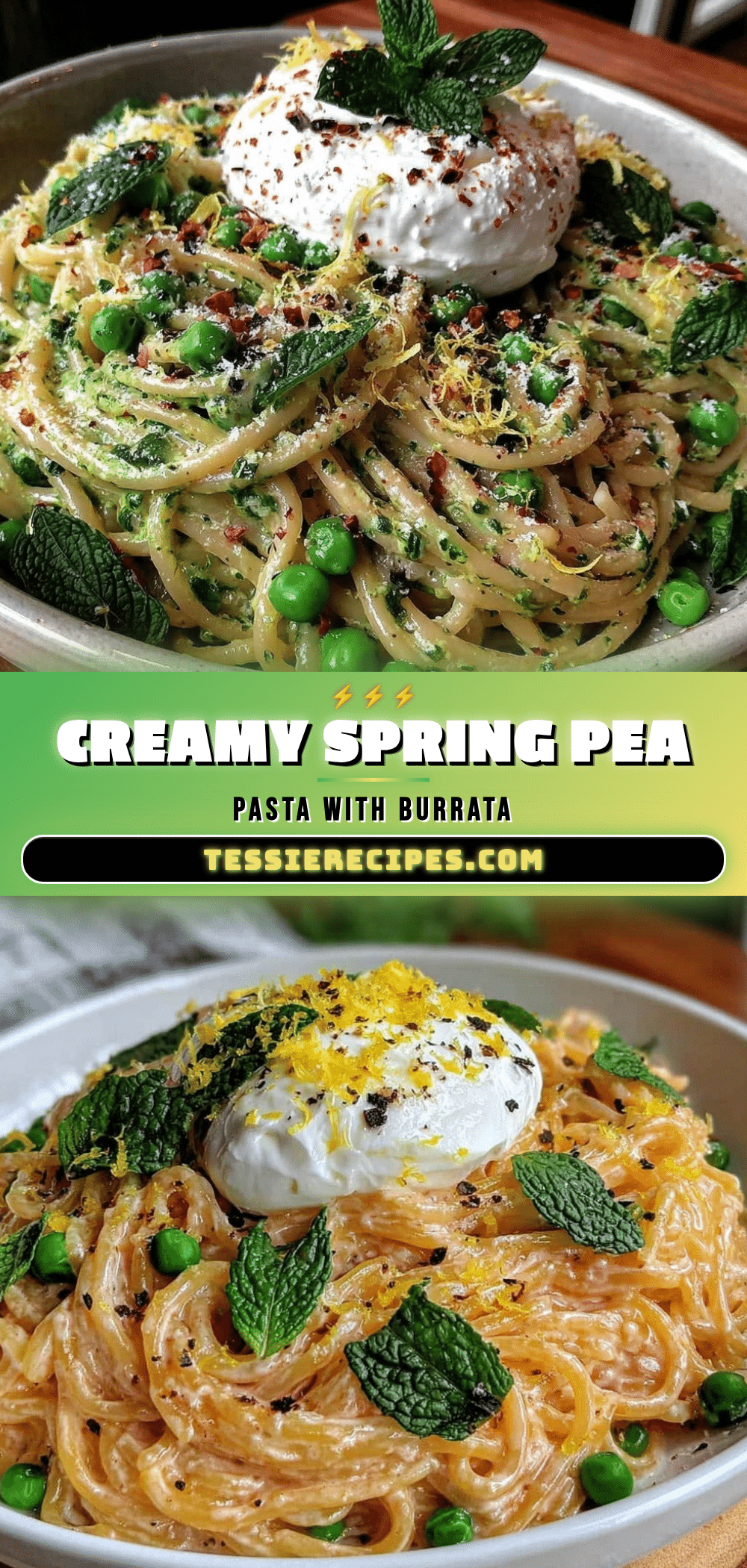
Fresh Spring Pea Pasta Recipe with Creamy Burrata and Zesty Lemon

A quick and easy pasta dish featuring fresh spring peas, creamy burrata, and bright lemon zest, perfect for light and fresh spring meals.
- Prep Time: 10 minutes
- Cook Time: 15 minutes
- Total Time: 25 minutes
- Yield: 4 servings 1x
- Category: Main Course
- Cuisine: Italian
Ingredients
- 12 oz (340 g) long pasta (spaghetti, linguine, or fettuccine)
- 1 ½ cups (about 225 g) fresh spring peas, shelled (or frozen, blanched)
- 1 ball burrata cheese (6–8 oz / 170–225 g)
- Zest from 1 large lemon
- 2 cloves garlic, minced
- 3 tablespoons extra virgin olive oil
- Small handful fresh mint or basil, chopped (optional)
- ¼ cup (25 g) grated Parmesan cheese (optional)
- Salt, to taste
- Freshly ground black pepper, to taste
- Pinch of red pepper flakes (optional)
Instructions
- Bring a large pot of salted water to a boil. Add 1 tablespoon salt (about 15 g). Boil pasta according to package instructions until al dente (8-10 minutes for spaghetti). Reserve 1 cup (240 ml) pasta water before draining.
- While pasta cooks, blanch peas in boiling water for 1-2 minutes until bright green and tender-crisp. Immediately plunge into ice bath or rinse under cold water to stop cooking.
- Heat olive oil over medium heat in a large skillet. Add minced garlic and sauté for 30 seconds to 1 minute until fragrant but not browned.
- Add drained peas to skillet and toss gently with garlic for about 1 minute to warm through. Add red pepper flakes if using.
- Add cooked pasta to skillet. Pour in ½ cup (120 ml) reserved pasta water and toss gently to combine, creating a silky sauce.
- Remove skillet from heat. Tear burrata into chunks and gently fold into pasta, allowing it to melt slightly.
- Sprinkle lemon zest over pasta and toss gently. Add freshly ground black pepper and chopped mint or basil if using.
- Serve immediately. Add extra Parmesan and a drizzle of olive oil if desired.
Notes
If pasta feels dry, add more reserved pasta water a tablespoon at a time. Tear burrata by hand to keep creamy texture intact. Blanch frozen peas briefly to preserve color and texture. Cook garlic carefully to avoid bitterness. Reserve pasta water to create a silky sauce.
Nutrition
- Serving Size: About 1 ½ cups per s
- Calories: 450
- Sugar: 5
- Sodium: 400
- Fat: 15
- Saturated Fat: 6
- Carbohydrates: 50
- Fiber: 6
- Protein: 18
Keywords: spring pea pasta, burrata pasta, lemon zest pasta, easy pasta recipe, fresh pea pasta, creamy pasta, spring meals