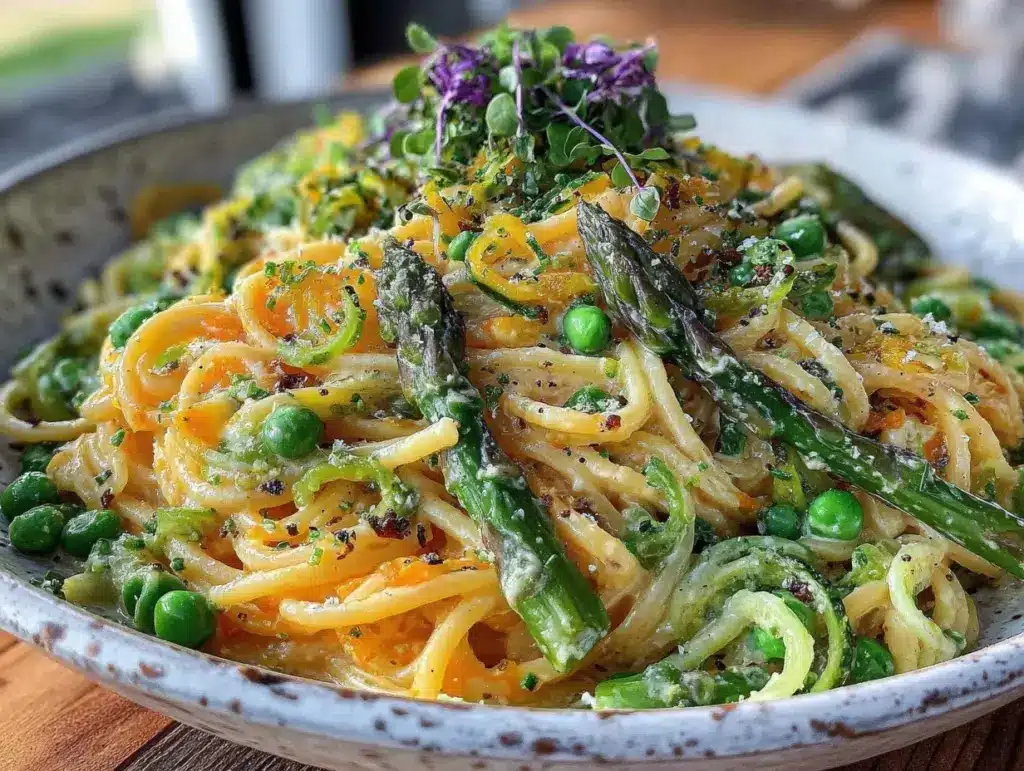
“You really have to try this,” my neighbor said, holding out a plate heavy with the most vibrant pasta dish I’d seen in weeks. I was skeptical — brown butter with bright spring veggies? Honestly, I thought it might be just another one of those “fancy” recipes that looked good but felt like a hassle. But that first bite changed everything.
The gentle nuttiness of the brown butter paired with a zesty lemon punch, all tossed with crisp-tender asparagus, peas, and sugar snap peas — well, it was something special. It reminded me of those quiet evenings when the kitchen smells like fresh herbs and something comforting is simmering on the stove, the kind of meal that feels like a reset after a long day. I ended up making this fresh spring vegetable pasta primavera with lemony brown butter several times that week — and each time, it got better.
I love how this recipe embraces the season’s best produce without fuss. The whole thing feels light but satisfying. Plus, the brown butter sauce? It’s a little magic that you might not expect to work but totally does. It’s one of those dishes where you pause mid-bite and think, “Okay, this is definitely a keeper.”
Now, whenever spring rolls around and the fresh veggies start showing up at the market, I find myself reaching for this recipe. It’s simple enough for a busy night but impressive enough when friends drop by unexpectedly. And honestly, there’s just something about the mix of bright lemon, nutty butter, and crisp vegetables that feels like a fresh start on a plate.
So, if you’re curious about a pasta primavera that’s not just another salad in disguise, stick around. This one’s got a bit of soul, some buttery goodness, and a fresh kick that might just surprise you.
Why You’ll Love This Fresh Spring Vegetable Pasta Primavera with Lemony Brown Butter
I’ve tested this recipe more times than I can count, tweaking the balance between the lemon and butter until it felt just right. This isn’t your typical primavera — it’s got a rich, nutty sauce that brings the veggies and pasta together in a way that’s both comforting and bright. Here’s what makes it stand out:
- Quick & Easy: Ready in about 30 minutes, perfect for those busy weeknights when you want something fresh but fuss-free.
- Simple Ingredients: No need for fancy or hard-to-find items — most of these are pantry staples or fresh produce you can grab at any market.
- Perfect for Spring: Celebrates the season’s best — think asparagus, peas, and spring onions — but you can swap in whatever’s fresh and local.
- Crowd-Pleaser: I’ve made this for family dinners and casual get-togethers, and it’s always a hit — even with those picky eaters who usually avoid veggies.
- Unbelievably Delicious: The nutty brown butter with tangy lemon zest isn’t run-of-the-mill; it’s what transforms simple veggies and pasta into something memorable.
What really sets this recipe apart is the brown butter sauce. I mean, butter is butter, right? Well, when you cook it until it’s golden and fragrant, it brings out these toasted, almost caramel-like notes that pair beautifully with the fresh, bright vegetables. Plus, the lemon juice and zest cut through the richness, giving it that fresh pop that wakes up your taste buds.
It’s a dish that feels like it took effort but actually comes together quickly. Whether you’re after a healthy weeknight meal or a colorful centerpiece for a spring dinner, this pasta primavera with lemony brown butter has that special something that keeps me coming back — and I think you’ll feel the same.
What Ingredients You Will Need for Fresh Spring Vegetable Pasta Primavera
This recipe uses straightforward, wholesome ingredients to deliver vibrant flavors and a satisfying texture without any fuss. Most are pantry staples or fresh market finds that lend themselves well to substitutions if needed.
- Pasta: 12 ounces (340 grams) of your favorite pasta, like linguine or fettuccine (I prefer Barilla for its firm texture)
- Asparagus: 1 bunch (about 1 pound/450 grams), trimmed and cut into 2-inch pieces (fresh and crisp is key here)
- Sugar Snap Peas: 1 cup (about 100 grams), trimmed
- Fresh Peas: 1 cup (about 150 grams), shelled (frozen peas work well in a pinch)
- Spring Onions: 4-5, thinly sliced (white and green parts both)
- Garlic: 3 cloves, minced (adds that essential savory punch)
- Unsalted Butter: 6 tablespoons (85 grams), for browning (use high-quality butter for best flavor)
- Fresh Lemon: Zest and 2 tablespoons juice (brightens the whole dish)
- Parmesan Cheese: ½ cup (50 grams), freshly grated (skip if you want it dairy-free or vegan)
- Fresh Herbs: 2 tablespoons chopped basil or parsley (adds freshness and color)
- Salt and Freshly Ground Black Pepper: To taste
- Olive Oil: 1 tablespoon (optional, to toss with pasta if needed)
Substitution tips: If you need gluten-free, swap the pasta for brown rice or chickpea pasta. For a vegan version, use a dairy-free butter alternative and nutritional yeast instead of Parmesan. In warmer months, feel free to swap peas for fresh fava beans or baby zucchini ribbons.
Equipment Needed
- Large Pot: For boiling the pasta. A big one helps prevent sticking.
- Large Skillet or Sauté Pan: To cook the vegetables and brown the butter. A heavy-bottomed pan works best for even heat.
- Colander or Strainer: To drain the pasta quickly and easily.
- Zester or Microplane: For zesting the lemon — fresh zest really makes a difference.
- Sharp Knife and Cutting Board: For prepping vegetables.
- Tongs or Pasta Fork: Handy for tossing pasta with sauce.
If you don’t have a microplane, a fine grater works just fine for zesting lemons. And if your skillet isn’t non-stick, just keep the heat moderate to avoid burning the butter. I’ve made this pasta in everything from cast iron pans to stainless steel, and it turns out great as long as you’re attentive when browning the butter.
Preparation Method for Fresh Spring Vegetable Pasta Primavera with Lemony Brown Butter
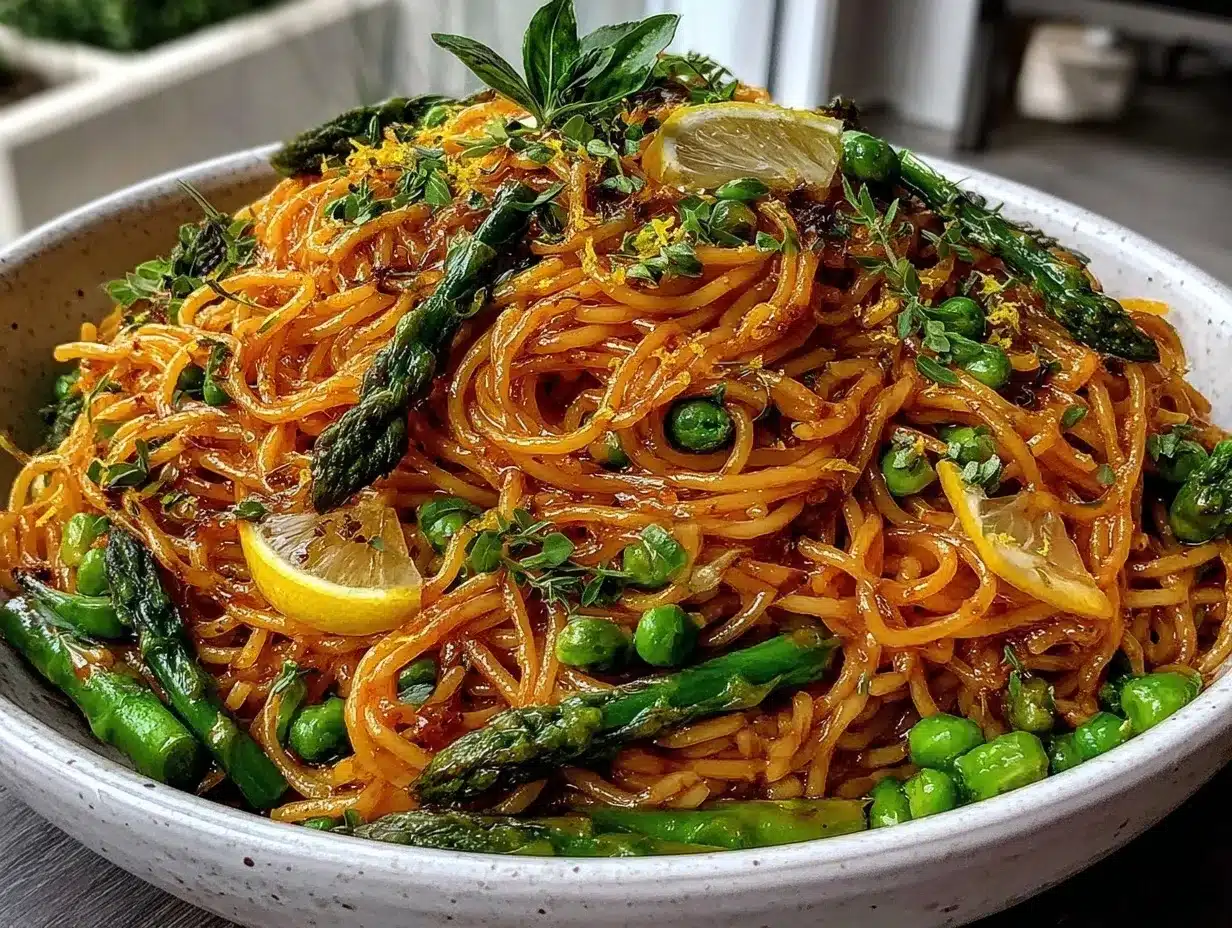
- Prepare the pasta: Bring a large pot of salted water to a boil. Cook 12 oz (340 g) pasta according to package instructions until al dente, usually about 8-10 minutes. Reserve 1 cup (240 ml) of pasta water before draining. This starchy water will help bind the sauce later.
- Prep the vegetables: While the pasta cooks, trim and cut 1 bunch of asparagus into 2-inch pieces. Trim 1 cup (100 g) sugar snap peas and shell 1 cup (150 g) fresh peas if using. Slice 4-5 spring onions thinly, separating white and green parts. Mince 3 garlic cloves.
- Cook the vegetables: Heat a large skillet over medium heat. Add 1 tablespoon olive oil if desired, then toss in the white parts of the spring onions and garlic. Sauté for 1-2 minutes until fragrant but not browned. Add asparagus and snap peas, sauté for about 4-5 minutes until crisp-tender. Toss in peas and cook another 2 minutes. Season with salt and pepper.
- Brown the butter: In a separate small pan, melt 6 tablespoons (85 g) unsalted butter over medium heat. Keep an eye on it, swirling occasionally. After about 4-5 minutes, the butter will foam and then start turning golden with nutty aromas — that’s when it’s perfectly browned. Remove from heat and stir in lemon zest and 2 tablespoons lemon juice immediately to keep the bright flavors.
- Combine pasta and veggies: Add the drained pasta to the skillet with vegetables. Pour in the lemony brown butter and toss everything together, adding reserved pasta water a little at a time to loosen the sauce if needed. The sauce should lightly coat the noodles and veggies without pooling.
- Finish and serve: Stir in ½ cup (50 g) freshly grated Parmesan cheese and 2 tablespoons chopped fresh basil or parsley. Taste and adjust seasoning with salt and pepper. Serve immediately with extra cheese on the side.
Tips: Watch the butter carefully when browning — it can go from perfect to burnt fast. Also, don’t overcook the vegetables; you want them bright and crisp. If the sauce feels too thick, a splash of reserved pasta water is a lifesaver. I learned the hard way that this step makes all the difference in silky texture.
Cooking Tips & Techniques for Success
Brown butter might sound fancy, but it’s really just butter cooked until it turns golden and smells nutty. The trick is to keep the heat moderate and stir often — once it starts foaming, things move quickly. I like using a light-colored pan so I can see the color change better.
When it comes to veggies, blanching is optional here since the quick sauté keeps everything crisp and fresh. But if you want a bit more tenderness, you can briefly plunge the asparagus or peas in boiling water before sautéing.
Don’t skip reserving pasta water — it’s starchy and helps the sauce bind with the noodles, giving you that silky finish instead of dry pasta. And tossing the pasta and veggies together off the heat with the butter sauce helps prevent overcooking.
One mistake I made early on was adding the lemon juice to the butter too late — it cooled the butter and dulled the flavor. Stir it in right after browning to keep the bright citrus note alive.
Finally, freshly grated Parmesan is a game-changer — the pre-grated stuff just doesn’t melt the same or add that depth. If you want to make this vegan, nutritional yeast is a surprisingly good swap.
Variations & Adaptations
Spring vegetables vary by region, so feel free to mix it up! Here are a few ideas I’ve played with:
- Seasonal swap: Replace asparagus and peas with thinly sliced zucchini, baby spinach, or fiddlehead ferns in early spring.
- Protein boost: Add grilled chicken strips, sautéed shrimp, or crispy bacon bits (like those from my cream cheese stuffed mushrooms with bacon) for a heartier meal.
- Gluten-free: Use your favorite gluten-free pasta or spiralized veggies like zucchini noodles to keep it light.
- Vegan version: Swap butter for vegan margarine or olive oil and Parmesan for nutritional yeast or a vegan cheese alternative.
- Spicy kick: Add red pepper flakes to the brown butter for a subtle heat that pairs well with the lemon.
One personal variation I adore is tossing in fresh mint leaves at the end for an unexpected refreshing twist. It’s perfect for those warm spring evenings when you want something bright with a little herbal surprise.
Serving & Storage Suggestions
This pasta primavera is best served immediately while the butter sauce is warm and glossy. I like to plate it with a sprinkle of extra Parmesan and a few fresh basil leaves for color. It pairs wonderfully with a crisp white wine or a sparkling water with lemon slices.
For leftovers, store in an airtight container in the refrigerator for up to 2 days. The sauce may thicken as it cools; gently reheat it in a skillet with a splash of water or broth to bring back the silky texture.
Flavors tend to meld nicely overnight, making it a great make-ahead lunch. Just add fresh herbs or a squeeze of lemon before serving to revive the brightness.
Nutritional Information & Benefits
This fresh spring vegetable pasta primavera with lemony brown butter offers a balanced mix of carbohydrates, healthy fats, and fiber-rich vegetables. Here’s an estimate per serving (serves 4):
| Calories | 450-500 kcal |
|---|---|
| Protein | 15 grams |
| Fat | 18 grams |
| Carbohydrates | 60 grams |
| Fiber | 6 grams |
The asparagus and peas provide vitamins A, C, and K, plus antioxidants that support immune health. Butter supplies fat-soluble vitamins and adds that comforting richness. Using fresh lemon juice boosts vitamin C, adding a natural brightness and aiding digestion.
This recipe is naturally gluten-free if you swap the pasta and can be made vegetarian or vegan with simple substitutions. Just watch out for the Parmesan if you have dairy sensitivities.
Conclusion
This fresh spring vegetable pasta primavera with lemony brown butter is one of those recipes that feels like a little celebration of the season on your plate. It’s simple, satisfying, and just a bit special — the kind of dish you’ll find yourself craving when you want something fresh but indulgent.
Feel free to make it your own with the variations or by adding your favorite seasonal veggies. I keep coming back to this recipe because it strikes that perfect balance between elegant and easy, and because the lemony brown butter just can’t be beat.
If you try it, I’d love to hear how you tweak it or what veggies you add. Sharing those little kitchen stories is what makes cooking feel like community. Here’s to fresh flavors and buttery goodness on your table soon!
Frequently Asked Questions about Fresh Spring Vegetable Pasta Primavera
Can I use frozen vegetables for this pasta primavera?
Yes, frozen peas and asparagus can work in a pinch. Just thaw and drain them well before sautéing to avoid excess moisture.
What type of pasta works best?
Long pasta like linguine, fettuccine, or spaghetti works well to catch the sauce and veggies. But feel free to use short pasta shapes like penne if that’s what you have.
How do I make the brown butter without burning it?
Cook the butter over medium heat and watch closely. Once it foams and turns golden with a nutty aroma, remove it from heat immediately to prevent burning.
Can I prepare this recipe ahead of time?
You can prep the vegetables and brown the butter ahead, but toss everything together just before serving for the best texture and flavor.
Is this recipe suitable for vegans?
Yes! Substitute the butter with a plant-based alternative and swap Parmesan for nutritional yeast or vegan cheese to keep it vegan.
For a delicious dinner with a cozy vibe, this pasta primavera pairs nicely with a warm bowl of creamy roasted butternut squash soup, creating a spring meal that’s both comforting and fresh.
Pin This Recipe!
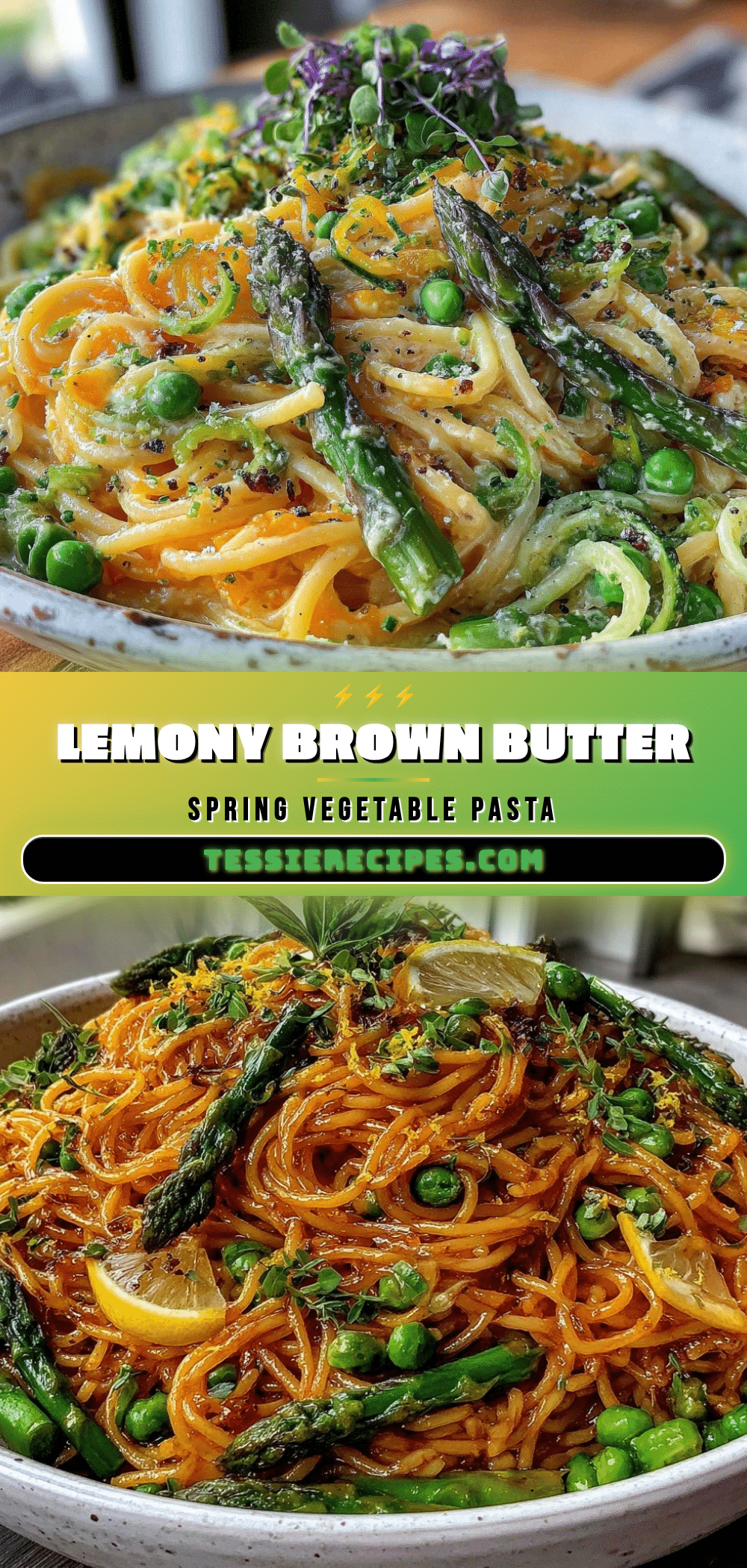
Fresh Spring Vegetable Pasta Primavera with Lemony Brown Butter

A vibrant and quick pasta primavera featuring crisp spring vegetables tossed in a nutty lemony brown butter sauce. This dish is light, satisfying, and perfect for celebrating the season’s best produce.
- Prep Time: 10 minutes
- Cook Time: 20 minutes
- Total Time: 30 minutes
- Yield: 4 servings 1x
- Category: Main Course
- Cuisine: Italian
Ingredients
- 12 ounces (340 grams) linguine or fettuccine pasta
- 1 bunch (about 1 pound/450 grams) asparagus, trimmed and cut into 2-inch pieces
- 1 cup (about 100 grams) sugar snap peas, trimmed
- 1 cup (about 150 grams) fresh peas, shelled (frozen peas can be used)
- 4–5 spring onions, thinly sliced (white and green parts)
- 3 cloves garlic, minced
- 6 tablespoons (85 grams) unsalted butter
- Zest and 2 tablespoons juice of 1 fresh lemon
- ½ cup (50 grams) freshly grated Parmesan cheese (optional for dairy-free/vegan)
- 2 tablespoons chopped fresh basil or parsley
- Salt and freshly ground black pepper, to taste
- 1 tablespoon olive oil (optional)
Instructions
- Bring a large pot of salted water to a boil. Cook 12 oz (340 g) pasta according to package instructions until al dente, about 8-10 minutes. Reserve 1 cup (240 ml) pasta water before draining.
- While pasta cooks, trim and cut asparagus into 2-inch pieces. Trim sugar snap peas and shell fresh peas if using. Thinly slice spring onions, separating white and green parts. Mince garlic.
- Heat a large skillet over medium heat. Add olive oil if using, then sauté white parts of spring onions and garlic for 1-2 minutes until fragrant but not browned.
- Add asparagus and sugar snap peas to skillet; sauté for 4-5 minutes until crisp-tender. Add peas and cook another 2 minutes. Season with salt and pepper.
- In a separate small pan, melt butter over medium heat. Swirl occasionally and cook for 4-5 minutes until butter foams and turns golden with nutty aroma. Remove from heat and immediately stir in lemon zest and juice.
- Add drained pasta to skillet with vegetables. Pour in lemony brown butter and toss to combine, adding reserved pasta water a little at a time to loosen sauce as needed.
- Stir in Parmesan cheese and chopped basil or parsley. Adjust seasoning with salt and pepper. Serve immediately with extra cheese on the side.
Notes
Watch the butter carefully when browning to avoid burning. Reserve pasta water to loosen the sauce for a silky texture. Do not overcook vegetables; keep them crisp-tender. For vegan version, use plant-based butter and nutritional yeast instead of Parmesan. Frozen vegetables can be used if thawed and drained well.
Nutrition
- Serving Size: 1 serving (about 1/4
- Calories: 475
- Sugar: 5
- Sodium: 350
- Fat: 18
- Saturated Fat: 11
- Carbohydrates: 60
- Fiber: 6
- Protein: 15
Keywords: pasta primavera, spring vegetables, brown butter, lemon pasta, easy dinner, vegetarian, quick pasta