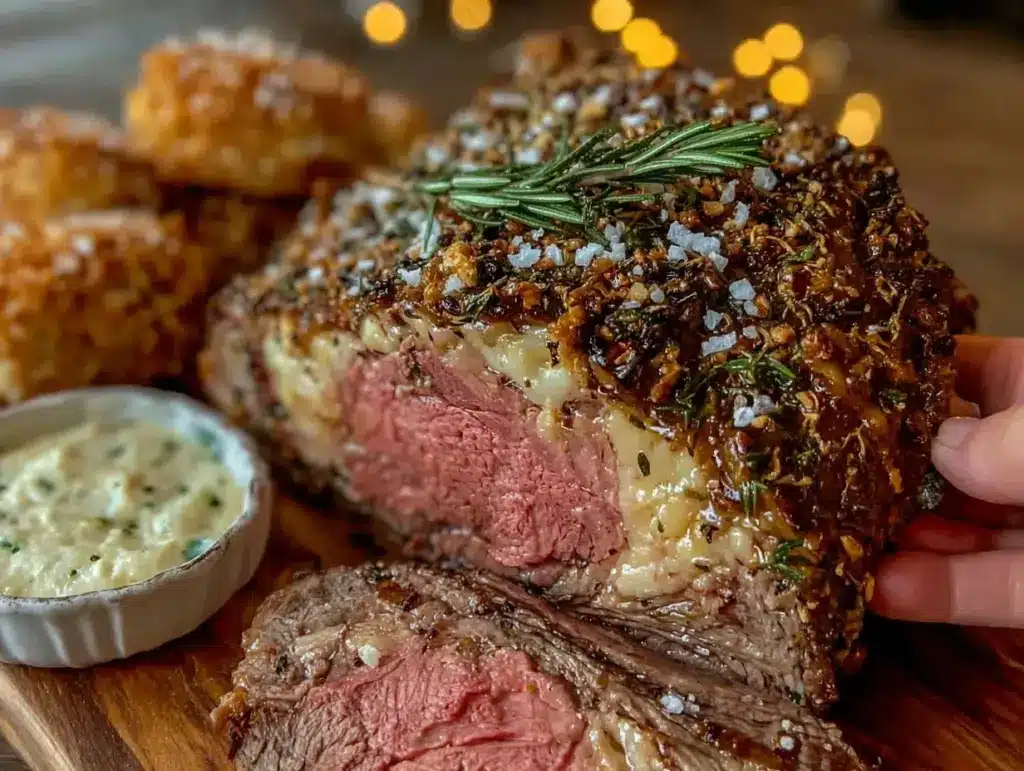
“You really think a prime rib dinner can be casual?” That’s what my friend asked the night I invited him over on a whim. Honestly, I was tired after a long week and just wanted something simple but impressive. I grabbed a prime rib roast from the butcher and decided to wing it with some herbs and a quick horseradish cream. The kitchen smelled like a cozy cabin retreat, all rosemary and garlic wafting through the air, and I was skeptical about how easy it’d be to pull off. But as the slices came out, juicy and tender with that perfect crust, the skepticism melted away like butter on warm bread.
That evening, the recipe was born not from fuss, but from the need for comfort and a little kitchen magic. Since then, I’ve found myself making this herb-roasted prime rib with horseradish cream again and again—whether for unexpected guests or a quiet night that calls for something special. There’s something quietly satisfying about this combo, a balance of rich meatiness and the bright, creamy kick of horseradish that feels like a little secret weapon in the kitchen.
What I love most is how approachable it is. You don’t need to be a grill master or own fancy tools. If you can season and roast, you’re halfway there. This recipe has stuck with me because it’s the kind of meal that makes you pause, savor, and maybe even close your eyes for a second bite. It’s the kind of dish that feels like a warm hug after a challenging day, without any of the stress that usually comes with roasting prime rib. That quiet confidence it gives you in the kitchen? That’s why this recipe is a keeper.
Why You’ll Love This Recipe
Making the perfect herb-roasted prime rib with horseradish cream isn’t just about the end result—it’s about the whole experience. After testing this recipe multiple times (and tweaking the herb blend just right), I can honestly say it’s one of the most reliable ways to get a tender, flavorful roast every single time. Here’s why it stands out:
- Quick & Easy: While it might seem fancy, the prep takes just 15 minutes. The slow roasting means you can relax while it cooks.
- Simple Ingredients: No need to hunt down exotic spices or specialty items. You’ll mostly use pantry staples and fresh herbs.
- Perfect for Special Occasions: Whether it’s a holiday dinner, a birthday, or a cozy weekend feast, this prime rib fits the bill.
- Crowd-Pleaser: Friends and family always ask for seconds—and the horseradish cream adds a zing that everyone loves.
- Unbelievably Delicious: The crust is herb-packed and crisp, while the inside stays juicy and tender. The horseradish cream brings a smooth, spicy contrast that’s just right.
This recipe’s secret weapon lies in the herb rub—a mix I’ve honed to balance warmth and freshness without overpowering the beef. Plus, the horseradish cream is not your typical store-bought sauce; whipping it up fresh brings a brightness and creaminess that complements the roast perfectly. You can tell this isn’t just another prime rib recipe—it’s the version I trust to impress without stress.
Honestly, this isn’t just a dish; it’s a little moment of joy in the kitchen, the kind of meal that turns a simple night into something memorable. It’s like the loaded cream cheese stuffed mushrooms with bacon I once made for a party—comfort food with a twist, but effortless enough to make anytime.
What Ingredients You Will Need
This recipe relies on simple, wholesome ingredients that come together to create a rich, flavorful prime rib with a fresh, tangy horseradish cream on the side. Most are pantry staples or easy to find at your local market.
- Prime Rib Roast (about 4-5 pounds / 1.8-2.3 kg) – Look for well-marbled beef for maximum juiciness. I prefer USDA Choice grade for the best balance of flavor and price.
- Olive Oil (2 tbsp) – Helps the herb rub stick and promotes browning.
- Garlic (4 cloves, minced) – Adds savory depth.
- Fresh Rosemary (2 tbsp, chopped) – The star herb, aromatic and earthy.
- Fresh Thyme (1 tbsp, chopped) – Compliments rosemary with a subtle floral note.
- Salt (2 tsp kosher salt) – Essential for seasoning and crust formation.
- Black Pepper (1 tsp freshly ground) – For mild heat and flavor.
- Horseradish Root or Prepared Horseradish (3 tbsp) – Freshly grated if possible, or a good-quality prepared horseradish works fine.
- Sour Cream (½ cup / 120 ml) – Adds creaminess and tang to the horseradish sauce.
- Mayonnaise (2 tbsp) – Balances the texture of the horseradish cream.
- Lemon Juice (1 tsp, freshly squeezed) – Brightens the horseradish cream with a bit of acidity.
- Salt and Pepper (to taste for horseradish cream) – Adjust seasoning to your liking.
You can swap fresh herbs for dried in a pinch—use about a third of the fresh amount if dried. For a dairy-free horseradish cream, try using coconut yogurt in place of sour cream, which keeps it tangy but vegan-friendly. When I can, I pick up fresh horseradish root from my local farmers market because it has that punch and crispness that prepared versions sometimes lack.
Equipment Needed
- Roasting Pan with Rack: Essential for even heat circulation and to keep the meat elevated so it doesn’t stew in its own juices.
- Meat Thermometer: A reliable instant-read or probe thermometer is your best friend here to monitor internal temperature perfectly.
- Sharp Chef’s Knife: For carving the roast without shredding the meat.
- Mixing Bowl: For combining the horseradish cream ingredients.
- Small Whisk or Spoon: To mix the horseradish cream smoothly.
- Cutting Board: Preferably wood or plastic with grooves to catch juices.
If you don’t have a roasting rack, no worries—just use a crumpled foil “rack” or thick-cut vegetables like carrots and celery under the roast to lift it off the pan bottom. For the thermometer, I’ve tried everything from expensive digital probes to simple analog versions, and honestly, a mid-range instant-read thermometer does the job just fine and won’t break the bank.
Preparation Method
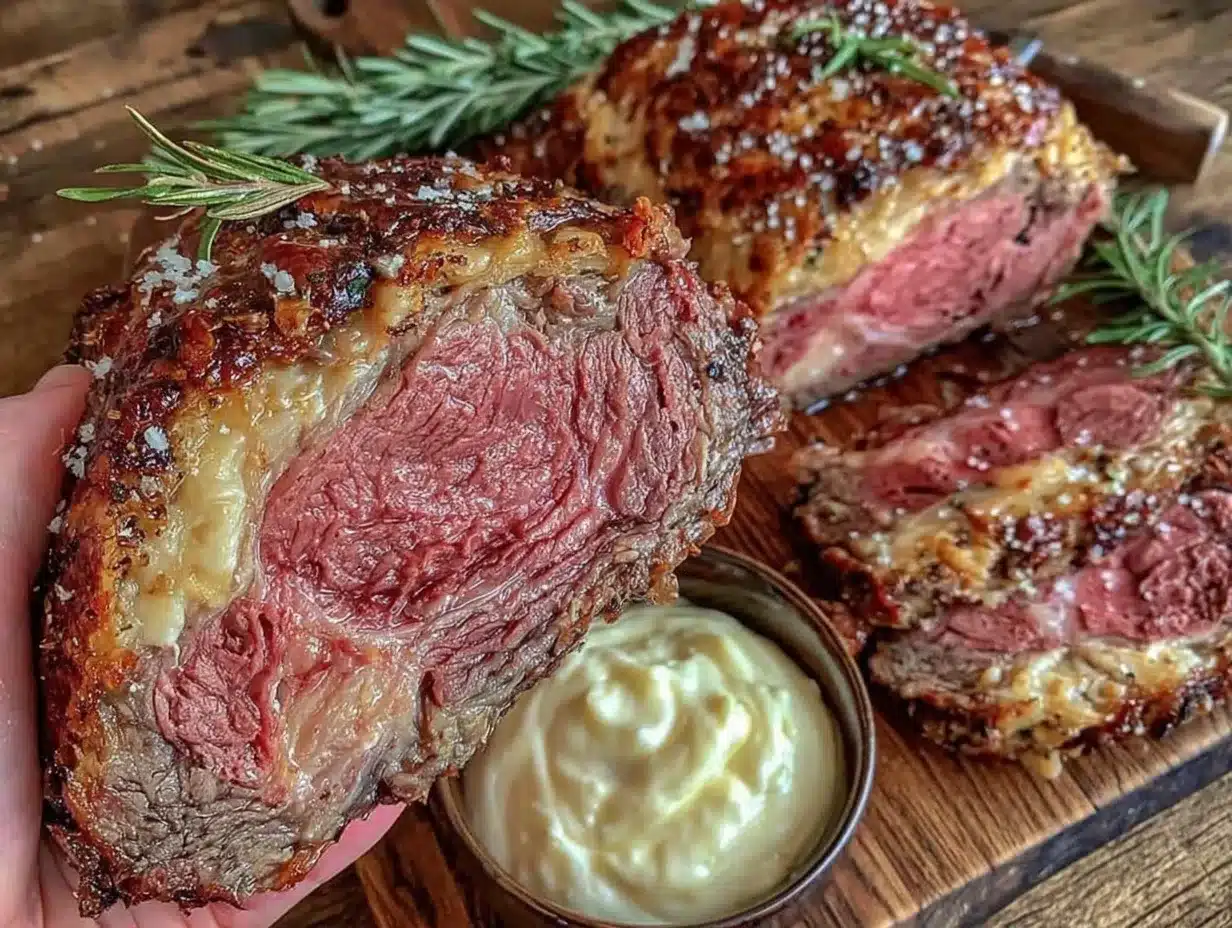
- Bring the roast to room temperature: Remove your prime rib from the fridge about 1 hour before cooking. This helps it cook evenly. (Approx. 60 minutes)
- Preheat your oven: Set it to 450°F (232°C). The high initial heat creates that beautiful, flavorful crust.
- Prepare the herb rub: In a small bowl, mix 2 tablespoons olive oil, minced garlic, chopped rosemary and thyme, salt, and freshly ground black pepper. Stir until well combined.
- Season the roast: Pat the prime rib dry with paper towels, then rub the herb mixture all over it—don’t be shy about massaging it in. This step is where your flavor starts building.
- Place the roast on the rack: Put the roast fat side up on your roasting rack inside the pan. This positioning lets the fat baste the meat naturally as it cooks.
- Roast at high heat: Put it in the oven and roast for 15 minutes at 450°F (232°C) to set the crust.
- Lower the temperature: After 15 minutes, reduce oven heat to 325°F (163°C) and continue roasting. Cooking times vary by size, but estimate about 15 minutes per pound for medium-rare. For a 5-pound roast, plan around 1 hour 15 minutes. Use the thermometer to check for 130°F (54°C) internal temperature.
- Rest the roast: Remove from oven, tent loosely with foil, and let it rest for 20-30 minutes. This step is crucial for juicy slices—meat fibers relax and reabsorb juices.
- Make the horseradish cream: While the roast rests, mix sour cream, mayonnaise, horseradish, lemon juice, salt, and pepper in a bowl. Taste and adjust seasoning if needed.
- Carve and serve: Slice the prime rib against the grain into thick, juicy slices, and serve with a generous dollop of horseradish cream on the side.
Pro tip: If you notice the crust browning too quickly, loosely cover the roast with foil partway through cooking. Also, keep an eye on the thermometer rather than relying solely on time. I once overcooked a roast by 10 minutes and learned that resting time can’t fix a dry prime rib, so better safe than sorry!
Cooking Tips & Techniques
Roasting prime rib might sound intimidating, but a few tips make it manageable even for a casual cook. First, patience is your ally—resist opening the oven door too often, or the temperature will drop and the crust won’t develop properly. The initial high heat blast is what forms that mouthwatering crust, so don’t skip it.
Using fresh herbs rather than dried really makes a difference in aroma and flavor. Rosemary and thyme bring out a woodsy depth that pairs beautifully with beef. Also, trimming excess moisture from the meat surface before applying the rub helps the crust crisp up better.
Internal temperature monitoring is key. I learned this the hard way when I guessed by time alone and ended up with uneven doneness. For medium-rare, aim for 130°F (54°C) before resting—the temperature will rise a few degrees while resting. If you prefer medium, wait until 140°F (60°C).
Finally, don’t underestimate resting time. It might be tempting to slice right away, but that resting period is what keeps the juices locked inside. While the roast rests, the horseradish cream comes together quickly and adds that perfect creamy punch. It’s like adding a little sparkle to the plate.
Variations & Adaptations
Feel free to make this recipe your own with a few tweaks:
- Spicy Twist: Add a pinch of cayenne pepper or smoked paprika to the herb rub for a subtle heat that complements the horseradish cream.
- Garlic Lovers: Roast whole garlic cloves alongside the prime rib for mellow, sweet garlic to spread on your slices.
- Low-Sodium Version: Cut back on salt and amp up fresh herbs and lemon zest in the rub to compensate, keeping flavor bright without too much sodium.
- Cooking Method Swap: You can also cook the prime rib on an outdoor grill using indirect heat, maintaining the same temperature guidelines for a smoky flavor.
- Dairy-Free Horseradish Cream: Use coconut yogurt and vegan mayo instead of sour cream and mayo for a creamy, tangy dip suitable for dairy-free diets.
One variation I tried recently was adding a splash of red wine to the pan drippings after roasting, turning it into a quick au jus sauce—added a whole new layer of richness. It paired beautifully with the horseradish cream and prime rib slices.
Serving & Storage Suggestions
Serve your perfect herb-roasted prime rib warm, sliced thick against the grain to showcase the tender, juicy interior. The horseradish cream should be chilled but brought to room temperature before serving for the best texture and flavor.
This roast pairs wonderfully with roasted vegetables, garlic mashed potatoes, or a crisp green salad to balance the richness. For drinks, a robust red wine or a classic cocktail like an Old Fashioned complements the dish beautifully.
To store leftovers, wrap slices tightly in foil or plastic wrap and refrigerate for up to 3 days. You can also freeze slices for up to 2 months—just thaw overnight in the fridge. When reheating, warm gently in a low oven (about 300°F/150°C) covered with foil to prevent drying out. The flavors actually deepen after resting overnight, so leftovers can taste even better the next day.
Nutritional Information & Benefits
A 4-ounce (113g) serving of herb-roasted prime rib contains roughly 280 calories, 22g of protein, 20g of fat, and minimal carbohydrates. This makes it an excellent source of high-quality protein and essential nutrients like iron and B vitamins.
The fresh herbs add antioxidants and anti-inflammatory compounds, while the horseradish cream provides a zesty complement with minimal calories. If you’re watching carbs, this recipe fits well within low-carb and keto diets.
Keep in mind, prime rib is rich and should be enjoyed in moderation as part of a balanced diet. For those with dairy sensitivities, the horseradish cream can be adapted using dairy-free alternatives without losing that creamy tang.
Conclusion
Perfect herb-roasted prime rib with horseradish cream is one of those dishes that feels fancy but is actually straightforward and forgiving. It’s a recipe that invites you to slow down, enjoy the process, and reward yourself with juicy, flavorful meat and a punchy sauce. I love it because it turns any dinner into a special occasion without the stress.
Don’t hesitate to tweak the herbs, spice level, or sauce to match your tastes—the best recipes are the ones you make your own. If you enjoy meals that balance comfort and a bit of flair, this prime rib will quickly become a go-to.
And hey, if you like hearty, flavor-packed dishes, you might appreciate the rich satisfaction of maple bourbon pork chops with caramelized apples or the warm coziness of creamy roasted butternut squash soup I’ve shared before. Thanks for stopping by, and I hope you get a chance to savor this one soon!
FAQs
What is the best way to cook prime rib for a tender result?
Slow roasting at a moderate temperature after an initial high-heat sear creates a juicy, tender prime rib with a flavorful crust. Using a meat thermometer to reach the right internal temperature is key.
Can I prepare the herb rub and horseradish cream ahead of time?
Yes! The herb rub can be mixed and applied a few hours before cooking or even overnight for deeper flavor. The horseradish cream is best made fresh but can be prepared a few hours ahead and stored in the fridge.
How do I know when the prime rib is done?
Use a meat thermometer inserted into the thickest part of the roast. For medium-rare, remove the roast at 130°F (54°C) and let it rest; it will rise to about 135°F (57°C) while resting.
What can I serve with prime rib to complete the meal?
Classic sides include roasted vegetables, mashed potatoes, Yorkshire pudding, or a fresh green salad. A rich au jus or creamy horseradish sauce pairs beautifully.
Can I use this recipe for smaller or larger cuts of beef?
Yes, just adjust cooking times based on weight, roughly 15 minutes per pound at 325°F (163°C) after the initial high-heat roast. Always rely on a thermometer for best results.
Pin This Recipe!
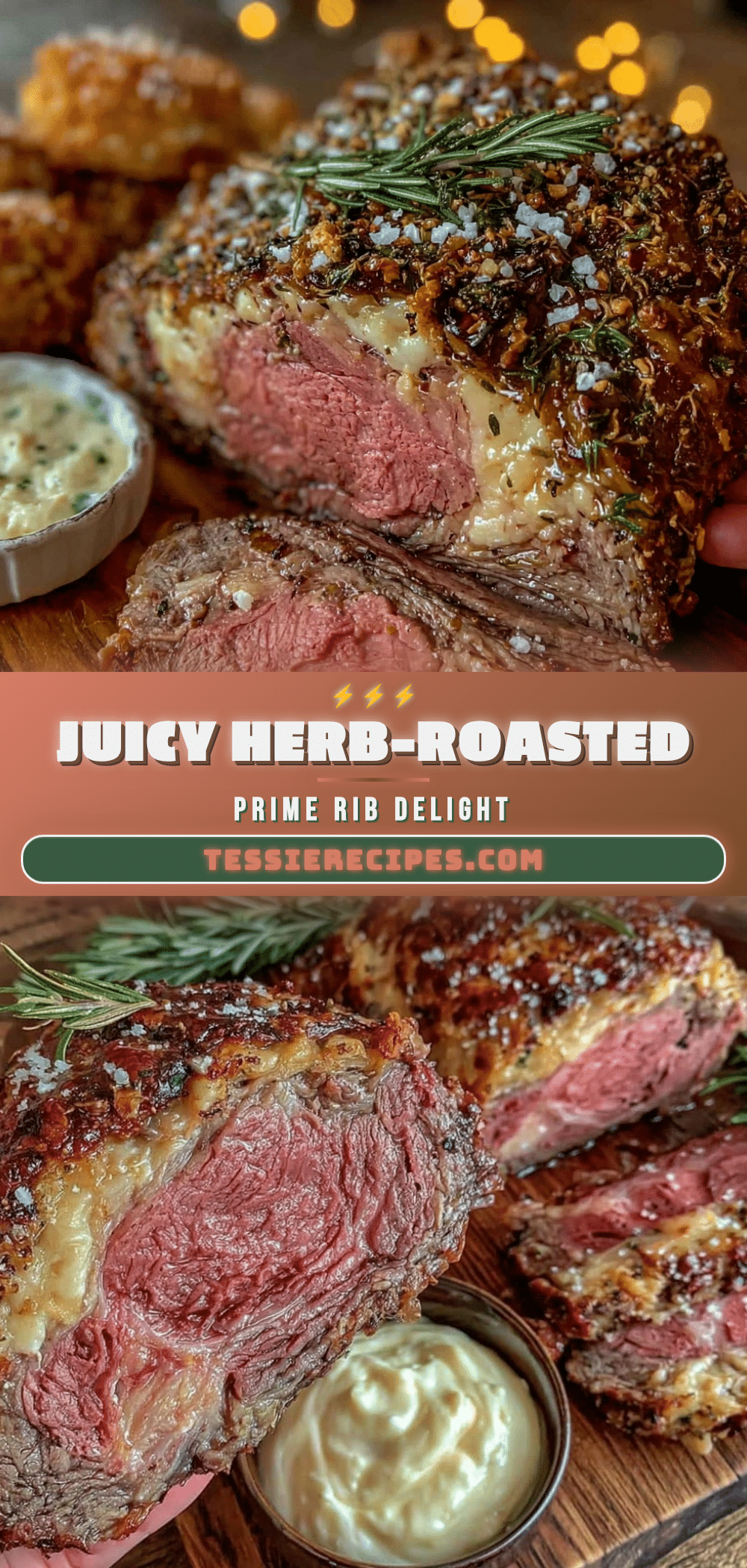
Perfect Herb-Roasted Prime Rib Recipe with Easy Horseradish Cream

A simple yet impressive herb-roasted prime rib with a flavorful crust and a bright, creamy horseradish cream sauce. Perfect for special occasions or a cozy dinner.
- Prep Time: 15 minutes
- Cook Time: 1 hour 30 minutes
- Total Time: 1 hour 45 minutes
- Yield: 8 servings 1x
- Category: Main Course
- Cuisine: American
Ingredients
- 4–5 pounds prime rib roast (USDA Choice grade preferred)
- 2 tablespoons olive oil
- 4 cloves garlic, minced
- 2 tablespoons fresh rosemary, chopped
- 1 tablespoon fresh thyme, chopped
- 2 teaspoons kosher salt
- 1 teaspoon freshly ground black pepper
- 3 tablespoons horseradish root or prepared horseradish
- 1/2 cup sour cream
- 2 tablespoons mayonnaise
- 1 teaspoon freshly squeezed lemon juice
- Salt and pepper to taste (for horseradish cream)
Instructions
- Remove prime rib from fridge about 1 hour before cooking to bring to room temperature.
- Preheat oven to 450°F (232°C).
- In a small bowl, mix olive oil, minced garlic, chopped rosemary and thyme, salt, and black pepper to prepare the herb rub.
- Pat the prime rib dry with paper towels, then rub the herb mixture all over the roast.
- Place the roast fat side up on a roasting rack inside a roasting pan.
- Roast at 450°F for 15 minutes to set the crust.
- Reduce oven temperature to 325°F (163°C) and continue roasting about 15 minutes per pound for medium-rare (about 1 hour 15 minutes for a 5-pound roast), or until internal temperature reaches 130°F (54°C).
- Remove roast from oven, tent loosely with foil, and let rest for 20-30 minutes.
- While roast rests, mix sour cream, mayonnaise, horseradish, lemon juice, salt, and pepper in a bowl to make horseradish cream. Adjust seasoning to taste.
- Carve the prime rib against the grain into thick slices and serve with horseradish cream.
Notes
If crust browns too quickly, loosely cover roast with foil partway through cooking. Use a meat thermometer for best results. Resting the roast is crucial for juicy slices. Fresh herbs are preferred but dried can be used at one-third the amount. For dairy-free horseradish cream, substitute sour cream with coconut yogurt and mayonnaise with vegan mayo.
Nutrition
- Serving Size: 4 ounces (113 grams)
- Calories: 280
- Fat: 20
- Protein: 22
Keywords: prime rib, herb roasted prime rib, horseradish cream, roast beef, holiday dinner, easy prime rib recipe, special occasion roast